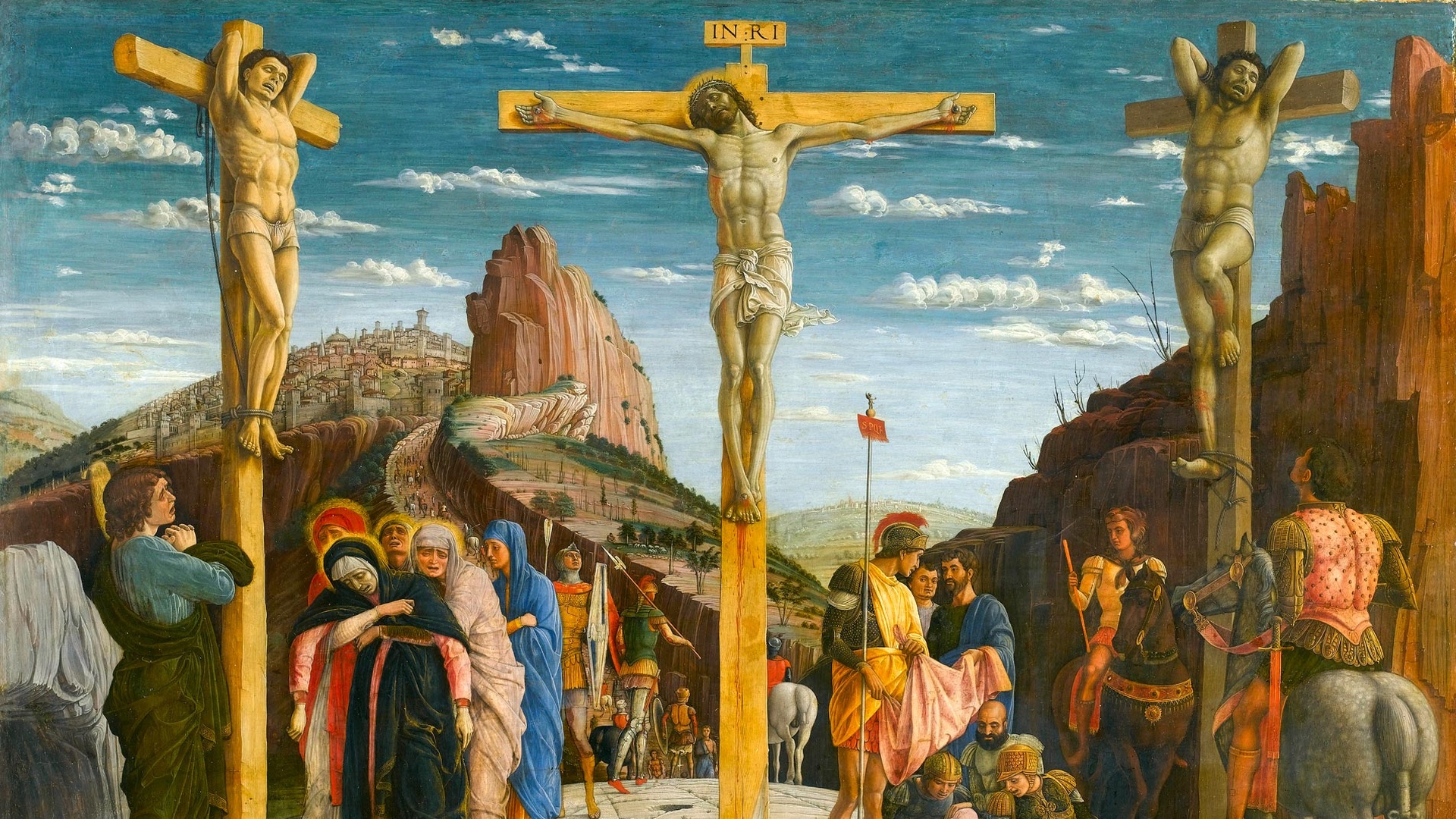
And without controversy great is the mystery of godliness: God was manifested in the flesh, justified in the Spirit, seen by angels, preached among the Gentiles, believed on in the world, received up in glory. (1 Timothy 3:16; NKJV)
In my last post, I looked the deity of Christ from a biblical perspective. One question I received was about the humanity of Jesus. If the Son is God, then do we “not believe that Jesus is a man of flesh and blood”? How do the Trinity and the humanity of Jesus fit together? Let’s get into it.
Historically, the humanity of Christ has been much less controversial than His deity. To be sure, there are some who have questioned His humanity. But the humanity of Jesus has always been more widely held than His deity. As Charles Ryrie points out,
Denials of the humanity of Christ are less common than denials of His deity. Why? Because as long as you do not inject the Deity factor into the person of Christ, He is only a man, however fine or exalted, and as merely a man He cannot disturb people with His claims so much as if He is the God-man.1
The doctrine of the Trinity explains the relationship between God the Father, Christ the Son, and the Holy Spirit. The humanity of Jesus is a related and separate doctrine called the Incarnation. The roots of the word “incarnation” break down to mean “in-flesh.” But how do the doctrines of the Trinity and the Incarnation fit together?
Louis Berkhof, an early twentieth-century Trinitarian, writes,
There has been a time, when the reality (Gnosticism) and the natural integrity (Docetism, Apollinarianism) of the human nature of Christ was denied, but at present no one seriously questions the real humanity of Jesus Christ. In fact, there is at present an extreme emphasis on His veritable humanity, an ever-growing humanitarianism. The only divinity many still ascribe to Christ, is simply that of His perfect humanity.2
And Ryrie, a later twentieth-century Trinitarian, observes,
Though the word [incarnation] itself does not appear in Scripture, its components (“in” and “flesh”) do. John wrote that the Word became flesh (John 1:14). He also wrote of Jesus coming in the flesh (1 John 4:2; 2 John 7). By this he meant that the eternal second person of the Trinity took on Himself humanity. He did not possess humanity until the birth, since the Lord became flesh.3
Similarly, Millard Erickson, writing at the turn of the twentieth-century, remarks,
If, however, Jesus was not really one of us, humanity has not been united with deity and we cannot be saved. For the validity of the work accomplished in Christ’s death, or at least its applicability to us as human beings, depends upon the reality of his humanity, just as its efficacy depends upon the genuineness of his deity.4
This small sampling from Trinitarians spanning nearly the last 100 years makes it clear that, generally, people who believe in the Trinity also believe in the Incarnation of Christ—that God the Son took to Himself a human nature, was born as a babe, and lived, died, and was resurrected in sinless humanity.
It is Christ’s humanity that enables Him to sympathize with human weakness and offer Himself as our Great High Priest to bring forgiveness for sin (Heb 2:17). It is in His humanity that He suffered temptation and He now extends mercy to us in our times of temptation (Matt 4:1–11; Heb 2:18). Truly, Christ must have a human nature. So, the doctrines of the Trinity and Incarnation are not in conflict. They compliment each other.
So, do Trinitarians believe in the humanity of Christ? Absolutely yes! There are almost sure to be a few outliers. But these are exceptions. They do not represent most Trinitarians. The doctrine of the Trinity and the Incarnation are not opposed. They are complimentary. Both the Trinity and the Incarnation are important doctrines of the historic Christian faith. And together they capture the whole teaching of the Bible about the nature of the Son, the God-man, Jesus Christ our Lord.
Notes
- Charles C. Ryrie, Basic Theology (Chicago: Moody, 1999), 286. Logos Bible Software.
- Louis Berkhof, Systematic Theology, Fourth rev. ed., (Grand Rapids, MI: Eerdmans, 1996), 318. Logos Bible Software.
- Ryrie, Basic Theology, 277.
- Millard J. Erickson, Christian Theology, Third ed. (Grand Rapids, MI: Baker, 2013), 645. Logos Bible Software.
Discover more from Tim Northup
Subscribe to get the latest posts sent to your email.
 Tim Northup
