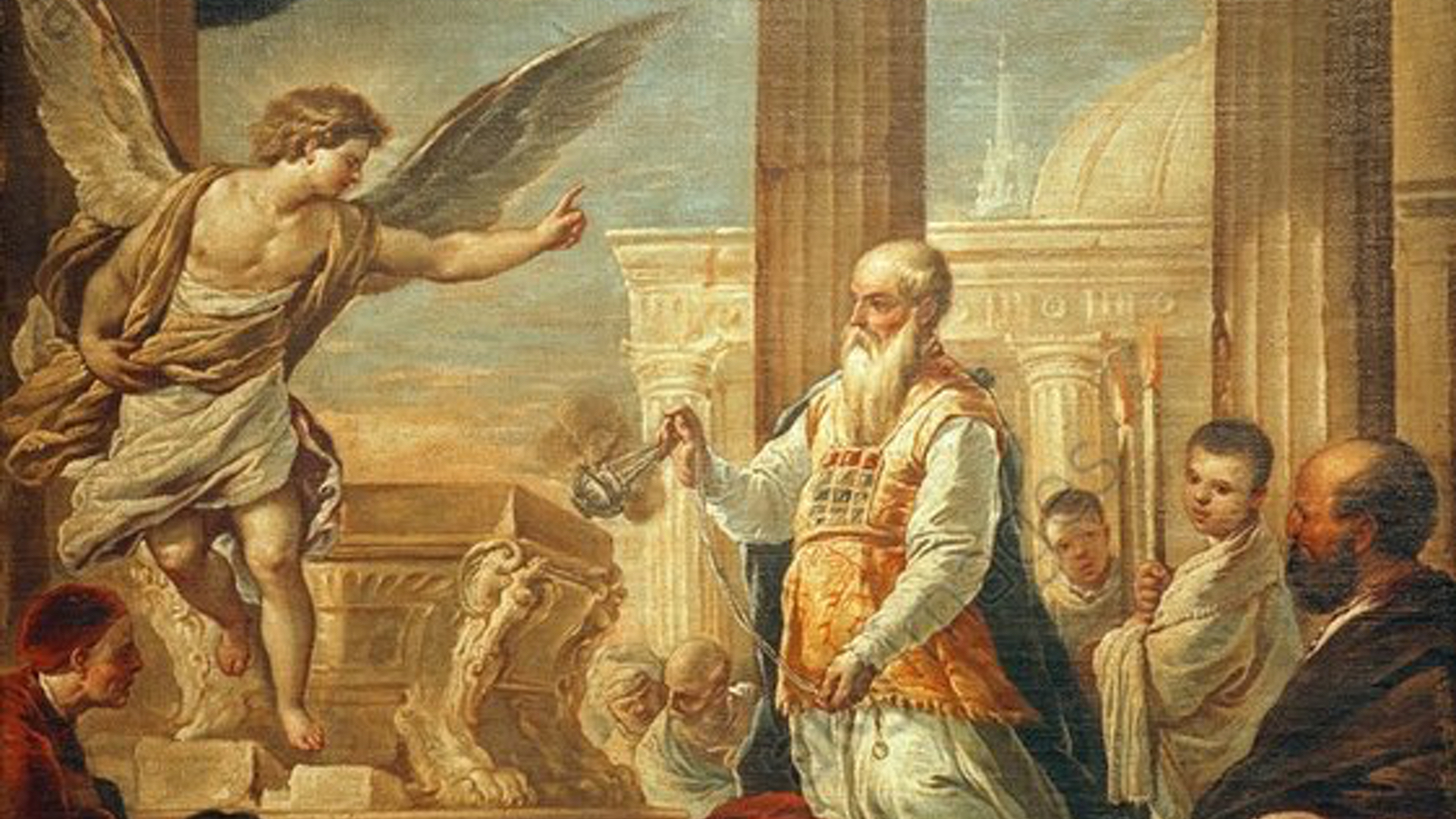
But the angel said to him, “Do not be afraid, Zacharias, for your prayer is heard; and your wife Elizabeth will bear you a son, and you shall call his name John. And you will have joy and gladness, and many will rejoice at his birth. (Luke 1:13–14; NKJV)
Have you ever prayed to God repeatedly about something deeply affecting your inner-most being? Maybe a personal life concern like marriage or family? Or a work life situation like education or job opportunities? Or maybe interceding for a loved one’s health or life circumstances? Do not lose heart—as we see in the life of Zacharias, God hears our prayers.
Zacharias was a priest married to a woman named Elizabeth. The couple was committed in faith to living life according to God’s ways (v. 6). But, despite their faithfulness to God, they had no children. Elizabeth described her barrenness as “my reproach among people” (v. 25). As one theologian comments, “They bear the ancient stigma that accompanies childlessness. Status markers are therefore mixed: an honor-bestowing priestly pedigree and fidelity to the Torah, to be sure, yet without a child to give this family a future.”
The priests during that time served in the temple by rotations (v. 9). It was during one of Zacharias’ rotations, when he was carrying out his regular priestly responsibilities in the temple (v. 8), when God encountered him through the angel Gabriel. Note two particular details. First, this was an arranged time for community prayer, as “the whole multitude of the people was praying outside at the hour of incense” (v. 10). Second, Zacharias “was troubled” at the sight of the angel—such things were not the norm.
The message Gabriel had for Zacharias was very important. Notice the first three things Gabriel says in verse 13: 1) Do not fear; 2) God has heard Zacharias’ prayer; and 3) Elizabeth will bear a son. The Bible depicts angels in various ways. How Zacharias saw it must have been an imposing sight, as “he was troubled, and fear fell upon him” (v. 12). But the angel was bringing joyful news. What was that news? That God heard Zacharias’ prayer for a child and was going to answer it with “Yes!” Gabriel then gave Zacharias several more instructions.
But Zacharias could not get past the first part of the message. He responded, “How shall I know this? For I am an old man, and my wife is well advanced in years” (v. 18). Based on Gabirel’s answer, it is clear that Zacharias was asking from a heart of doubt, not faith (v. 20). His hangup was their age—“they were both well advanced in years” (v. 7). Their situation was reminiscent of Abraham and Sarah (Gen 15:4–5; 21:1–2). It was not as if God could not miraculously provide. But miracles are, by definition, rare and supernatural. Zacharias, at that moment, was unable to believe God for a miracle in this area of his life.
Doubt is the enemy of joy. Fear is the enemy of faith. Maybe Zacharias was fearful for his and Elizabeth’s future without children to provide for them as they grew older. Maybe the heartbreak of childlessness was so painful that doubt consumed his heart. We can only guess why Zacharias did not believe. But I think most of us can relate, doubting God’s love for us and His willingness to intervene in our lives. Fearing a future resigned to joylessness. But this kind of fear-filled doubt is from the Enemy. One of Satan’s most successful tactics against Christians is making our witness ineffective through fear and doubt (1 Pet 5:8–9).
I want to encourage you today, God hears your prayers. Pour your heart out to Him. Can I guarantee He will grant your every desire? No. Does He promise to miraculously intervene in every circumstance? No. But I can promise that He hears. And He cares. He invites you to bring your every care to Him (1 Pet 5:6). And when we make a habit of pouring our hearts put to Him in prayer, we are sure to find peace and rest, and sometimes miracles, in our Heavenly Father’s loving embrace (Phil 4:6–7).
Discover more from Tim Northup
Subscribe to get the latest posts sent to your email.
 Tim Northup