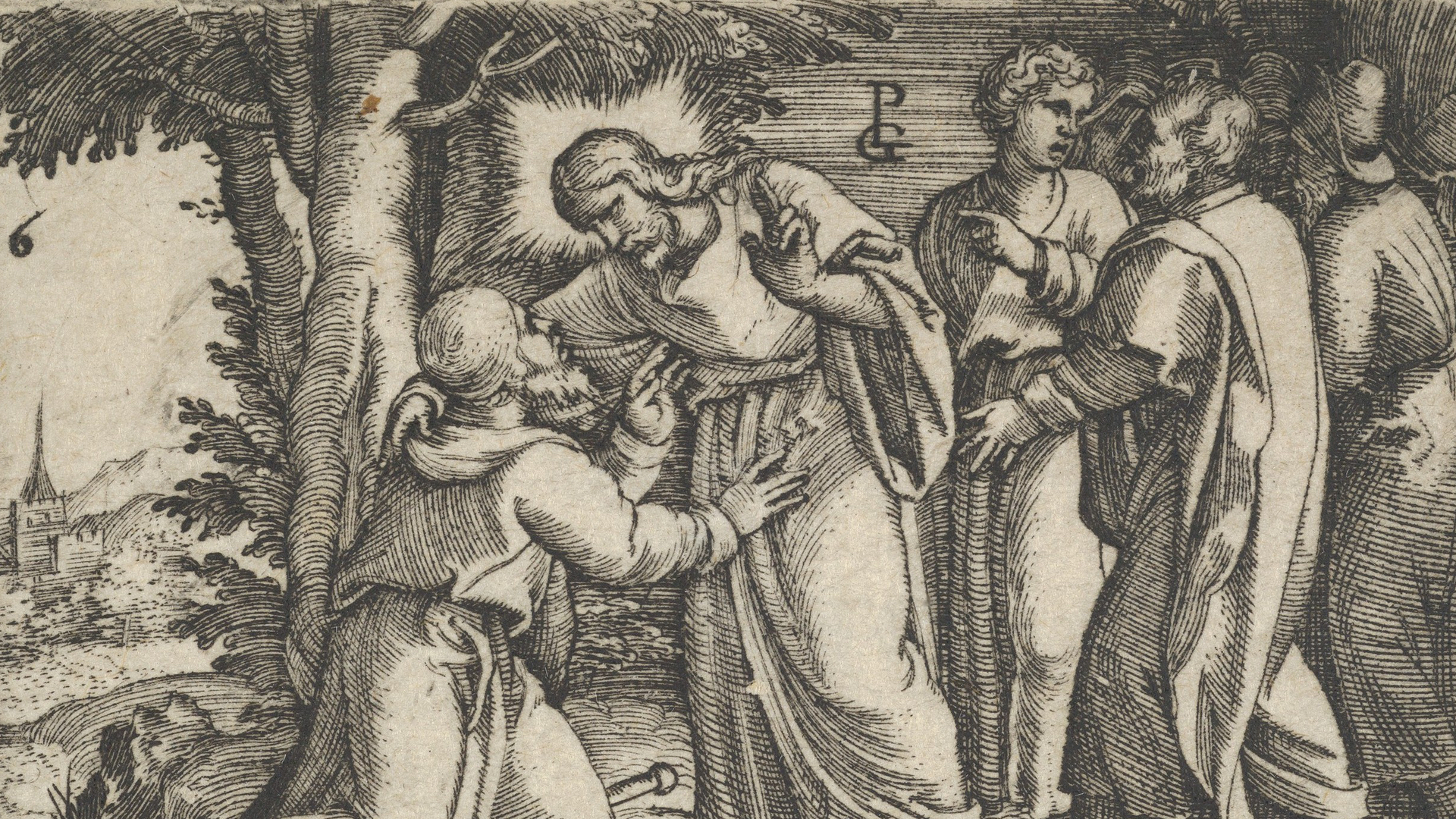
When He had come down from the mountain, great multitudes followed Him. And behold, a leper came and worshiped Him, saying, “Lord, if You are willing, You can make me clean. Then Jesus put out His hand and touched him, saying, “I am willing; be cleansed.” Immediately his leprosy was cleansed. (Matt 8:1–3; NKJV)
Worshipping God is a core value in Christianity and a prominent topic in the modern church. There are a lot of different ideas about what worship means and how it looks. Is worship music, or lifestyle, both, or something else? Are there any boundaries for dress, music, preaching, and other modes of expression? If so, what are they and why? If not, why not?
This is the first of a series of posts I’m hoping to write about these kinds of questions. In this post, I’ll look at the meaning of the word ‘worship’ in Scripture and glean some initial thoughts for rightly thinking about worship. If you have any questions relating to the topic of Christian worship, please leave a comment and I’ll try and address them in my posts.
A Leper Came and Worshipped
The passage at the beginning of this post describes Jesus’ encounter with a leper. Matthew places this encounter just after Jesus’ sermon on the mount (Matt ch. 5–7). While it is unclear whether Mathew intends a specific mountain (i.e., Sinai or Zion), he seems to drawing a strong parallel between the teaching ministries of Jesus and Moses.1
Matthew follows this extended teaching with a series of miraculous healings. The first of these is the leper who “came and worshipped Him.” In ancient times, leprosy referred to a group of skin diseases that, in Israel, made the victim ritually unclean (Lev 13:1–46).2 The only Old Testament healings of leprosy came through the prophets Moses and Elisha (Num 12; 2 Kgs 5), looking ahead to the miraculous works and prophetic office of the promised Messiah (Deut 18:15).3
Matthew writes that the leper “came and worshipped Him.” The leper risked public appearance, bearing the shame of his ritual uncleanness, to fall down at the feet of Jesus. He made no presumption upon Jesus, but humbly pleaded for both physical healing and ritual cleansing.4
The leper, despite his shame and status, came and worshipped Jesus.
The Word ‘Worship’ in the Bible
The word ‘worship’ occurs 197 times in 186 verses throughout the Bible (NKJV), give or take depending on your translation. It translates a handful of different Hebrew, Aramaic, and Greek words, which I will look at in just a moment.
Our modern English word ‘worship’ derives from the Old English conjunction worth-ship, which means ascribing worth to something.5 It can be both a noun and a verb. As a noun, it has three main senses: 1) a feeling or expression or reverence; 2) great admiration or devotion; 3) a title of respect.6 As a verb, it has two main senses: 4) show reverence or adoration, esp. to a deity; and 5) feeling great admiration or devotion.7
So, the basic sense of our English word ‘worship’ is the feeling or action of giving adoration, devotion, or reverence.
Old Testament Words for ‘Worship’
In the Old Testament, the word ‘worship’ translates five different Hebrew words and one Aramaic word. The primary Hebrew word for ‘worship’ is shachah. It is translated ‘worship’ in about half of its occurrences (98 of 171). Its basic meaning is bowing down.8
The second Hebrew word for ‘worship’ is ʿābad. It is translated ‘worship’ five times of its 304 occurrences. Its basic meaning is to serve.9 The third Hebrew word for ‘worship’ is ʿāśâ. It is translated ‘worship’ only twice of 2,633 occurrences. Its basic meaning is to do or fashion.10 The fourth Hebrew word for ‘worship’ is ʿāṣab. It is translated ‘worship’ once of its two occurrences. Its basic meaning is to make or worship.11 The fifth Hebrew word for ‘worship’ is ʿātār. It only occurs once and is translated ‘worshipers.’ Its basic meaning is worshiper.12
The only Aramaic word translated ‘worship’ is sĕgid. It occurs only in Daniel and is translated ‘worship’ nearly every time (11 of 12 occurrences). It’s basic meaning is bowing down in homage.13
In summary, the basic idea of worship in the Old Testament is bowing down or giving reverence. This lines up well with our English word ‘worship,’ keeping the focus on the feeling or action of giving adoration, devotion, or reverence.
New Testament Words for ‘Worship’
In the New Testament, the word ‘worship’ translates five different words or groups of words (ten different words in total) in the New Testament. The primary Greek word group for ‘worship’ is proskuneo. It is translated ‘worship’ in almost all of its occurrences (58 of 60). Its basic meaning is bowing down in humility.14 The related word proskunetes occurs once and means worshipper.15
The second Greek word group for ‘worship’ is sebomai. It is translated ‘worship’ seven times of its ten occurrences. Its basic meaning is to reverence or worship.16 The related word sebazomai occurs once and has the same basic meaning.17 The related word sebasma occurs three times and refers to an object of reverence.18 The related word eusebeo occurs twice and has the sense of devotion.19 The related word theosebes occurs once and has the sense of worshipper.20
A third Greek word for ‘worship’ is latreuo. It is translated ‘worship’ four times of its 21 occurrences. Its basic meaning is to serve.21 A fourth Greek word for ‘worship’ is therapeuo. It is translated ‘worship’ one of its 44 occurrences. Its basic meaning is to pay homage, heal, or cure.22 The final Greek word for ‘worship’ is threskeia. It is translated ‘worship’ once of its four occurrences. Its basic meaning is religion.23
In summary, the basic idea of worship in the New Testament is bowing down, giving reverence, or serving. In general, this lines up well with the Old Testament idea of worship and our modern English understanding, with perhaps slightly more emphasis on serving.
The Basic Idea of Biblical Worship
We can now glean a well-rounded, general sense of what biblical worship means. First, there is an inner disposition of the heart. The worshipper has an attitude of humility and reverence toward the object or subject of worship. Second, there is an outward expression of the body. The worshipper demonstrates their reverence, especially through bowing down or rendering service.
In summary, I will define biblical worship as follows:
Worship is giving adoration and devotion to God, flowing from a humble and reverent heart, and shown by actions of praise and service, as our right response to who God is and what He does for us.
Jesus Put Out His Hand and Touched Him
Let’s return to the leper’s encounter with Jesus.
First, the leper “came and worshipped [proskuneo] Him.” The leper bowed down before Jesus, showing His humility and reverence for Jesus. He perceived the divine anointing on Jesus. He knew enough to think that Jesus was worthy to receive worship. And he did not let the pain and shame of his condition keep him from worshipping Jesus.
Second, the leper worshiped Jesus before Jesus healed Him. He did not worship Jesus because of what Jesus had already done for him (in an earthly, historical sense). He worshipped Jesus because Jesus was worthy to receive that worship regardless of what Jesus might do in the present or future about his condition.
Third, the leper boldly and publicly expressed his hope in Jesus. The leper was an outcast, prohibited from public worship and all social settings because of His condition. His only companionship would have been others suffering from the same condition. But he believed Jesus could change that. And He confessed his faith and hope in Jesus publicly before others.
Fourth, Jesus’ healing was immediate. God heals us this side of eternity in many different ways. Often, He works through the gifts of modern medicine and gifted medical practitioners. When His answer is delayed, He invites us to keep praying (Luke 11:5–10). And although we are destined to die physically, we can also be sure that Jesus saves completely all who come to the Father through Him (Heb 9:27–28; 7:25).
Fifth, Jesus did not withhold the leper’s need for cleansing. Jesus While Jesus does not heal every earthly disease, He can and does forgive our sin and restore us from the shame of our sinfulness. When Jesus touched the leper, Jesus did not become unclean; the leper became clean. Jesus restores us to our God-ordained relationship with the Father, other people, and Creation, and empowers and guides us to learn to live out those relationships in ways that honor Him.
Come and Worship Him
In 21st century Christianity, there are a lot of different ideas about what worship means and how we can (or cannot) and should (or should not) worship God. Many of our questions can be answered by searching the Bible and carefully interpreting what God has told us about worshipping Him.
What does it mean to worship God? Worship is our proper response to God for who He is and what He’s done for us. As the man with leprosy in Matthew 8 shows us, worship involves both our attitudes and our actions being characterized by adoration and devotion to God.
May we be a people who look toward God with humble adoration and devotion in our hearts that moves us to conduct ourselves in ways that honor and praise Him in our lives.
Notes
- Grant R. Osborne, Matthew, Zondervan Exegetical Commentary on the New Testament, ed. Clinton E. Arnold (Grand Rapids, MI: Zondervan, 2010), 165. Logos Bible Software.
- Ibid., 283.
- Ibid.
- Ibid.
- Catherine Soanes and Angus Stevenson, eds., Concise Oxford English Dictionary (Oxford: Oxford University, 2004). Logos Bible Software.
- Ibid.
- Ibid.
- Edwin Yamauchi, “שָׁחָה,” in Theological Wordbook of the Old Testament, ed. R. Laird Harris, Gleason L. Archer Jr., and Bruce K. Waltke (Chicago: Moody, 1999), 914. Logos Bible Software.
- Walter C. Kaiser, “עָבַד,” in Theological Wordbook of the Old Testament, ed. R. Laird Harris, Gleason L. Archer Jr., and Bruce K. Waltke (Chicago: Moody, 1999), 639. Logos Bible Software.
- Thomas E. Mccomiskey, “עָשָׂה,” in Theological Wordbook of the Old Testament, ed. R. Laird Harris, Gleason L. Archer Jr., and Bruce K. Waltke (Chicago: Moody, 1999), 701. Logos Bible Software.
- Ronald B. Allen, “עָצַב,” in Theological Wordbook of the Old Testament, ed. R. Laird Harris, Gleason L. Archer Jr., and Bruce K. Waltke (Chicago: Moody, 1999), 688. Logos Bible Software.
- Ronald B. Allen, “עָתַר,” in Theological Wordbook of the Old Testament, ed. R. Laird Harris, Gleason L. Archer Jr., and Bruce K. Waltke (Chicago: Moody, 1999), 708. Logos Bible Software.
- James Strong, Enhanced Strong’s Lexicon (Woodside Bible Fellowship, 1995), s.v. “5457 סְגִד”. Logos Bible Software.
- Christopher A. Beetham, ed., “Προσκυνέω,” Concise New International Dictionary of New Testament Theology and Exegesis (Grand Rapids, MI: Zondervan Academic, 2021), 784. Logos Bible Software.
- Ibid.
- Christopher A. Beetham, ed., “Σέβομαι,” Concise New International Dictionary of New Testament Theology and Exegesis (Grand Rapids, MI: Zondervan Academic, 2021), 826. Logos Bible Software.
- Ibid.
- Ibid.
- Ibid.
- Ibid.
- Christopher A. Beetham, ed., “Λατρεύω,” Concise New International Dictionary of New Testament Theology and Exegesis (Grand Rapids, MI: Zondervan Academic, 2021), 502. Logos Bible Software.
- Christopher A. Beetham, ed., “Θεραπεύω,” Concise New International Dictionary of New Testament Theology and Exegesis (Grand Rapids, MI: Zondervan Academic, 2021), 376. Logos Bible Software.
- Christopher A. Beetham, ed., “Θρησκεία,” Concise New International Dictionary of New Testament Theology and Exegesis (Grand Rapids, MI: Zondervan Academic, 2021), 383. Logos Bible Software.
Discover more from Tim Northup
Subscribe to get the latest posts sent to your email.
 Tim Northup
