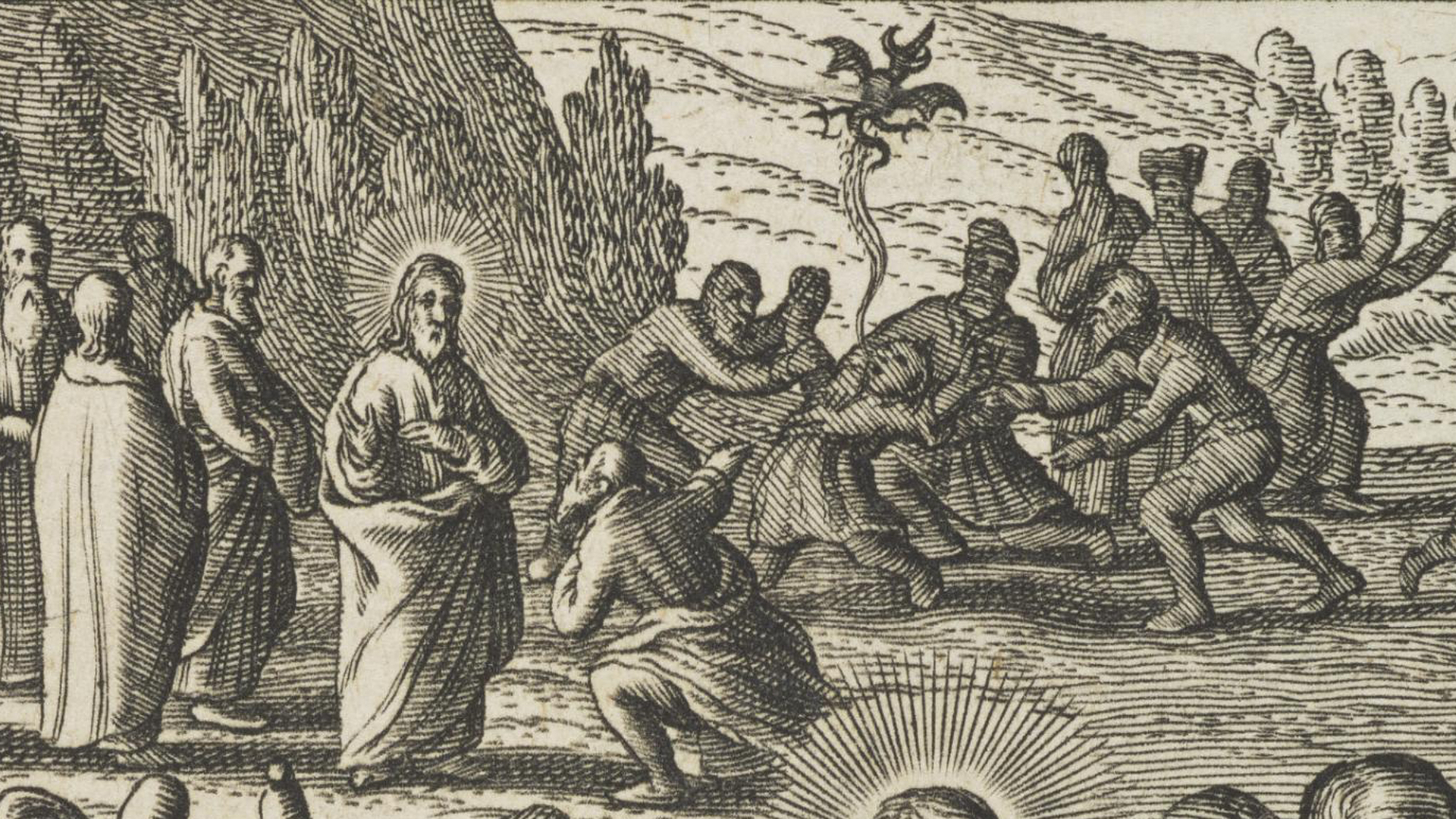
And they were all amazed at the majesty of God. But while everyone marveled at all the things which Jesus did, He said to His disciples, “Let these words sink down into your ears, for the Son of Man is about to be betrayed into the hands of men.” (Luke 9:43–44; NKJV)
Luke chapter 9 is a major turning point in Luke’s Gospel. It is situated in the central portion of Luke’s narrative, which focuses on the Gospel of the Kingdom of God. Jesus, after disclosing core truths of the Kingdom and demonstrating His Kingdom authority (ch. 8), delegates His message and authority to the Twelve and reveals to them His identity as the Christ (9:1–36). He then begins teaching them about true discipleship, including His mission to serve the world by securing salvation through His death (9:37–62).
Following Luke’s narrative, Jesus came down from the mountain where Peter, James, and John witnessed His transfiguration and was met by a large crowd (v. 37). Luke narrows his focus to a certain man who cries out, asking Jesus to heal his son (v. 38).
The man explains that his son is demon-possessed, which in this situation includes violent seizures and other harm to his son’s body (v. 39). Also, Jesus’ disciples had already tried and failed to cast this demon out (v. 40). This detail is all-the-more meaningful since Jesus had given his disciples power and authority to do that very thing just a short time earlier (9:1–2).
Jesus’ actions show his compassion for the man and his son. Luke states very simply that “Jesus rebuked the unclean spirit, healed the child, and gave him back to his father” (v. 42). The focus is not, however, on the miracle itself. Luke’s account of the son’s healing reaches its climax just before the miracle with Jesus’ heart-wrenching response, “O faithless and perverse generation, how long shall I be with you and bear with you? Bring your son here” (v. 41).
Luke is contrasting the disciples’ inadequacy with the crowd’s unbelief. As one theologian explains, “Though the disciples are unable to heal the boy, Jesus does not chastise them. Inability and inadequacy are limitations, not faults. In contrast, disbelief (12:46) and perverse belief (Acts 13:8, 10; 20:30) are willful choices for which people are culpable.”1 It is not the disciples’ failure that breaks Jesus’ heart. It is the continuing unbelief that characterizes those Jesus came to save.
As the crowd stood amazed at this might display of the majesty of God, Jesus turned to His disciples and spoke to them. This distinction is very relevant for the modern church and Western society as a whole. How often do we hear or read someone who takes issue with God, asking why He doesn’t make Himself known? Claiming that if they could see just one irrefutable miracle, then they would believe? But not seeing the miracles of God isn’t due to the miracles not happening—it’s due to our unwillingness to believe.
The crowds in Jesus day witnessed the miracles firsthand. Many experienced miraculous healing in their own bodies. Many others saw the miracles before their very eyes. But, as Luke records later in His narrative, even when Jesus healed ten lepers, only one returned to thank Him (Luke 17:11–19). Thus, the rarity of miracles is not reason to doubt God. Miracles are, by definition, rare and divine exceptions to the normal working of God’s created order. Still, when they do occur, they can be witnessed by anyone with hearts open to seeing them.
Here, we find two core truths about true followers of Jesus. One is that the miracles do not surprise us, although they do strengthen and encourage our faith. The second, and more important, is that our faith comes before the miracles and remains when the miracles don’t come. Because our faith is not in the miracles. Our faith is in the One who does the miracles.
Our faith is informed by the historical evidences of the miracles of God, but it is not dependent on them, except one—the resurrection of Jesus Christ, without which, Paul explains, our faith is empty and useless (1 Cor 15:12–19). Rather, our faith acknowledges and surrenders to the reality of sin and the results of physical death and judgment that, since the Fall, are the destiny of all humankind (Heb 9:27).
These truths magnify the majesty of God manifested in Jesus Christ the Son. The crowds marveled at the physical, temporal healing of the man’s son. But Jesus turned to His disciples and revealed the even-greater reason why He came—His proclamation of healing and freedom (Luke 4:18–19) wasn’t merely, nor primarily, for our present, physical experience, but for eternity, and would require Him to give His life for ours.
Christian—let your faith be encouraged, strengthened, and renewed by miracles. But even more so, by drawing near to Jesus daily. Because it is in and through Him that we have forgiveness of sins and the hope of eternity with God. Let’s rejoice in the sure promises of our eternal hope and share the light and good news of salvation in Him so others can share our hope of peace and joy in eternity with Him.
Notes
- James R. Edwards, The Gospel According to Luke, Pillar New Testament Commentary (Grand Rapids, MI: Eerdmans, 2015), 287. Logos Bible Software.
Discover more from Tim Northup
Subscribe to get the latest posts sent to your email.
 Tim Northup