Now great multitudes went with Him. And He turned and said to them, “If anyone comes to Me and does not hate his father and mother, wife and children, brothers and sisters, yes, and his own life also, he cannot be My disciple. And whoever does not bear his cross and come after Me cannot be My disciple. (Luke 14:25–27; NKJV)
In Luke chapter 14, Jesus brings His teaching about following Him full circle. Most of the chapter takes place in the house of a ruler of the Pharisees on the Sabbath. Jesus makes clear that following Him means forsaking the things of the world and wholeheartedly committing to the plans and purposes of God in our lives.
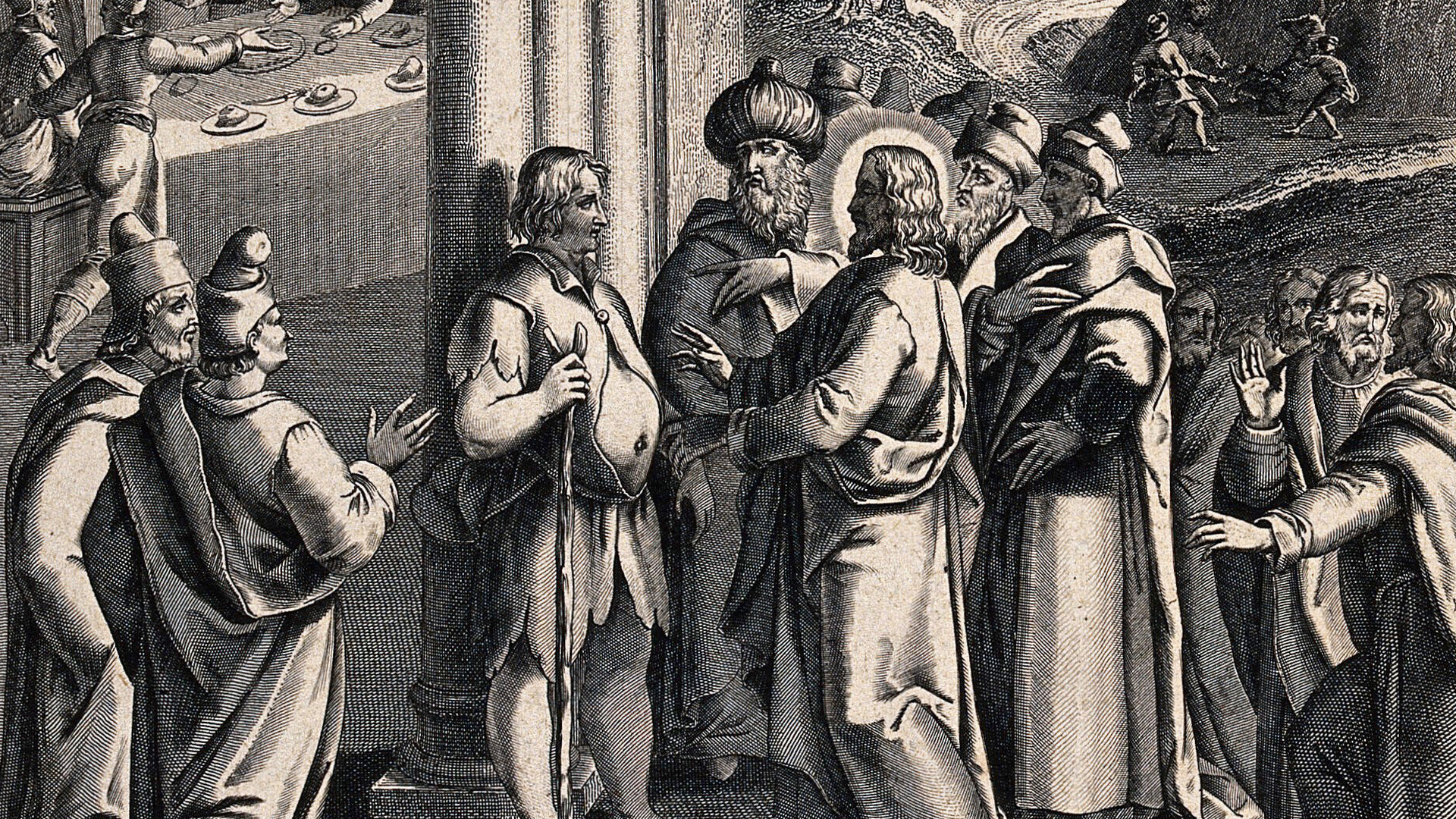
Chapter 14 begins with Jesus dining at a Pharisee’s house on the Sabbath. Jewish custom was for such a meal to take place around noon.1 Also, itinerate Jewish rabbis were often invited to the Sabbath meal.2 However, it was not custom to invite persons who would be considered ritually unclean, such as this man suffering with swollenness or edema.3 That the Pharisees were also watching Jesus closely (v. 2) suggests that the host may have had ulterior motives.4
This divine appointment recalls Jesus’ healing of the woman with infirmity in chapter 13. The Jewish leaders were not fond of Jesus’ Sabbath healings. They considered the healings a violation of their traditions surrounding the Mosaic prohibition of working on the Sabbath (Exod 20:8–11). However, as Jesus made clear, their traditions were inconsistent on the matter, and, as Lord of the Sabbath, Jesus was the ultimate authority on the Law of the Sabbath (Mark 2:23–28).
Chapter 14 continues with two parables. The Parable of the Ambitious Guest teaches that God is looking for humble servants, not servants who exalt themselves. The Parable of the Wedding Feast teaches that God invites all to follow Him, but it is the lowly in spirit who are blessed to receive and participate in His Kingdom.
Jesus makes the point clear at the end of the chapter as He leaves the Pharisee’s house. Following Jesus is not a matter of personal glory or lifestyle convenience. Following Jesus requires us to surrender all our earthly possessions and relations to the plans and purposes of God.
In verse 26, Jesus says we are to “hate” our parents, spouses, children, and even ourselves. Such language can be confusing to the modern Western reader. But Jesus is not talking about emotional malice—He is talking about decisive commitment between two important and competing obligations.5 The reality is that following Jesus requires us to make difficult decisions that those nearest and dearest to us will often not understand and will feel as if our choosing Jesus means forsaking them.
It is important to understand that anyone not fully committed to following Jesus is governed by the thinking and lifestyle patterns of the world. Following Jesus is upside down and backwards compared to the world’s way of thinking and living. So, believers who have strong relational ties will struggle mightily with what following Jesus requires of their relationships, because following Him means violating the worldly expectations that accompany such relational ties.
Interestingly, Jesus had already promised that houses would be divided over Him (Luke 12:52–53). And He speaks to these relational challenges a short time later in Luke 21:16–17,
You will be betrayed even by parents and brothers, relatives and friends; and they will put some of you to death. And you will be hated by all for My name’s sake.
Many of our Christian brothers and sisters throughout the world have endured heartbreaking division from their families because of their faith. As the modern West increasingly forsakes its nominally Christian moral convictions, we can expect to see such things happen more frequently here as well.
Following Jesus requires wholehearted adoration and devotion to our Lord. But the wickedness of the world knows no area of life that is off limits, including friendship and family ties. If following Jesus means that your family and friends are forcing you to choose Him or them, know that you are not alone. May your local church be a place of loving comfort and encouragement. And keep hoping and praying that the Lord will bring the light of eternal life to your family and friends as well.
Notes
- James R. Edwards, The Gospel According to Luke, Pillar New Testament Commentary, ed. D. A. Carson (Grand Rapids, MI: Eerdmans, 2015), 416. Logos Bible Software.
- Ibid.
- Ibid.
- Ibid.
- Ibid., 426.
Discover more from Tim Northup
Subscribe to get the latest posts sent to your email.
 Tim Northup