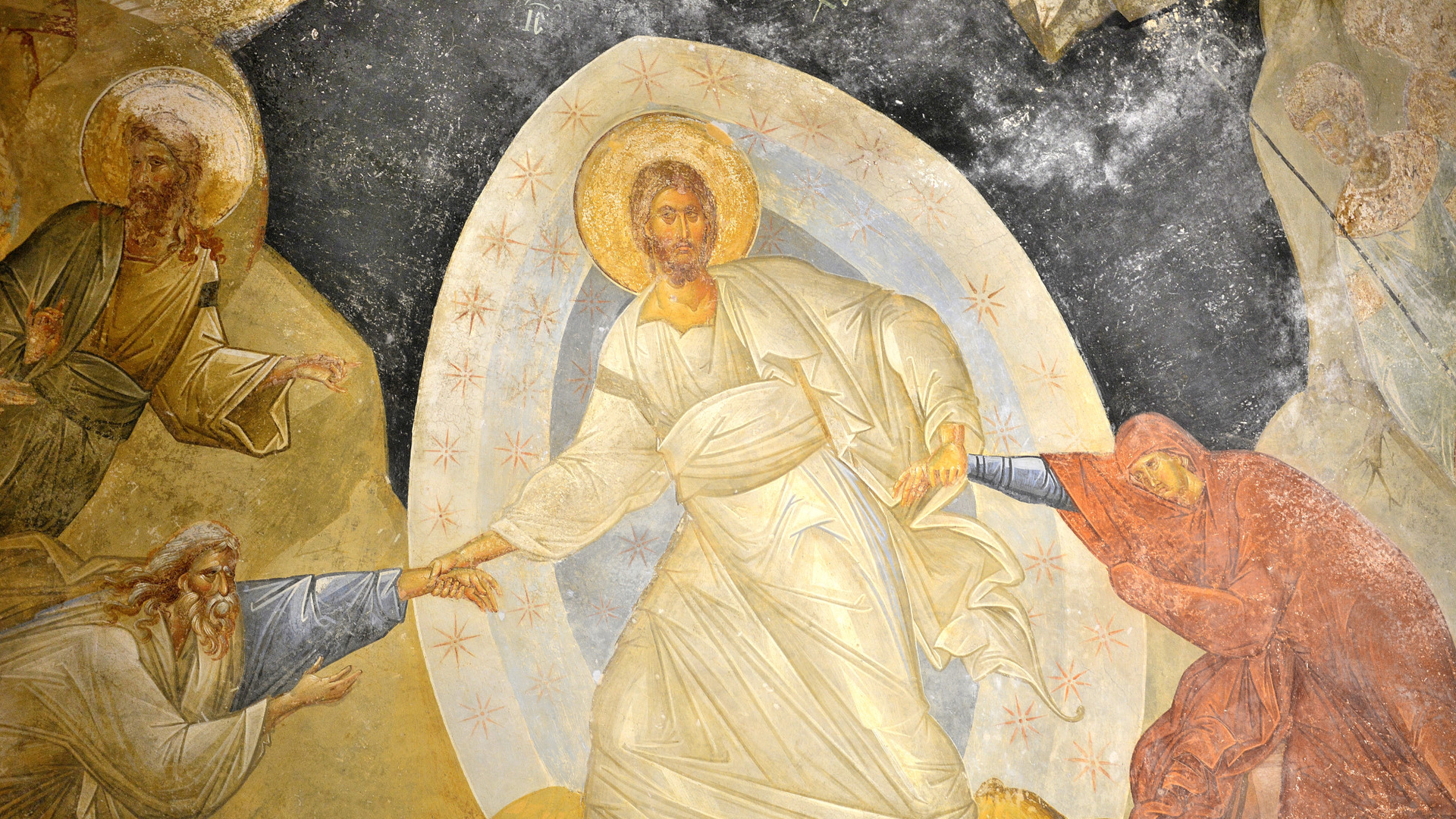
Jesus answered and said to them, “The sons of this age marry and are given in marriage. But those who are counted worthy to attain that age, and the resurrection from the dead, neither marry nor are given in marriage; nor can they die anymore, for they are equal to the angels and are sons of God, being sons of the resurrection. (Luke 20:34–36)
Luke chapter 20 summarizes Jesus’ testing by the religious leaders after His arrival in Jerusalem and leading up to Passover. One of the many details I find interesting in this chapter is how these events connect to Passover.
God’s instructions for Passover were for each family to set aside their Passover Lamb on the 10th of Aviv/Nisan (Exod 12:3; Deut 16:1). During the next 4 days, the family would inspect the lamb for blemishes, observe its perfection, and bond with it.1 On the 14th of Aviv/Nisan the family would slay the lamb (Exod 12:6). The meal was to be finished that night, the beginning of the 15th. The following morning (the same day by Jewish reckoning, the 15th), the priests would sacrifice a special lamb on the altar for the nation.2
We can trace the days and dates of the Passion week like this:
Jesus arrived in Jerusalem on Sunday, the 10th of Nisan. He ate the Passover meal with His disciples on the the night of the 15th, following Mosaic Law (Exod 12:3; Mark 14:12–18). He was crucified the following morning as the special lamb sacrificed for the nation.3 Jesus died and was buried before sundown the same day (Friday), the Day of Preparation before the Sabbath (Luke 23:50–56). He was in the tomb the remainder of that day, the entire Sabbath day (Saturday), and resurrected before daylight on the third day (Sunday), the first day of the week (Luke 24:1–7).4
Luke 20, then, depicts the testing of Jesus in fulfillment of the testing of the Passover Lamb from the 10th of Aviv/Nisan to the 14th. Luke narrates three such tests: Jesus’ authority (Luke 20:1–8); paying taxes (vv. 19–26); and the resurrection (vv. 27–38). Matthew and Mark add a fourth—the question about the greatest commandment (Matt 22:34–40; Mark 12:28–34). What was the result? As Luke notes, “they could not catch Him in His words” (Luke 20:26) and “they dared not question Him anymore” (v. 40).
Jesus presented Himself in Jerusalem on the 10th of Nisan as Israel’s Passover Lamb. He was tested by the religious leaders until the 14th and was found to be without blemish or defect. Thus, He was fit to redeem us by His blood (1 Pet 1:18–19; Heb 10:10).
One of the tests Jesus encountered was about the resurrection. The Sadducees challenged Him with a hypothetical scenario about Levirate marriage (Deut 25:5–10). But the question was insincere, because the Sadducees did not believe in the resurrection (Luke 20:27).
Jesus’ answer made it clear that the Sadducees were mistaken. But it also gives us great insight into eternal life. What will the resurrection be like?
First, it is limited to only some individuals, “those who are counted worthy” (Luke 20:35). Second, there will be no marriage, suggesting that God has ordained marriage only for this side of eternity (v. 36). Third, there will be no more death (c.f., Rev 21:4). Fourth, the resurrected saints will be “equal to the angels and are sons of God,” i.e., we will be transformed into a spiritual condition like our resurrected Lord (1 Cor 15:42–49; 1 John 3:2).
The sad truth is that eternity is not for everyone, but only for those who believe in Jesus (John 3:16). This is why it is so important for us as believers to yield our life vision, mission, and values to Jesus—because God has sovereignly instructed us to participate in His mission of sharing the Good News of salvation through faith in Jesus with the world.
At the same time, our joy is not found in the brokenness of the world—it is found abiding with the presence of our Lord (John 15:1–11). For all who believe, we are “sons of the resurrection” (Luke 20:26) and heirs of glory with our Lord (Rom 8:16). Therefore we have hope. Because our God is not God of the dead, but of the living. We are partakers with our Lord in His inheritance of eternal life (Col 1:12; Eph 1:13–14).
As we begin a New Year, let this truth be your encouragement through hardship and your motivation to share Jesus with others. And remember that “whatever may pass, and whatever lies before us,”5 nothing can separate us from eternity with our Lord (e.g., Rom 8:37–39).
Notes
- Arnold G. Fruchtenbaum, The Feasts and Fasts of Israel: Their Historic and Prophetic Significance (San Antonio, TX: Ariel Ministries, 2019), 46. Epub.
- Ibid.
- Ibid., 74.
- Ibid., 99.
- “10,000 Reasons (Bless the Lord),” track 4 on Matt Redman, 10,000 Reasons, Sparrow Records, 2011.
Discover more from Tim Northup
Subscribe to get the latest posts sent to your email.
 Tim Northup