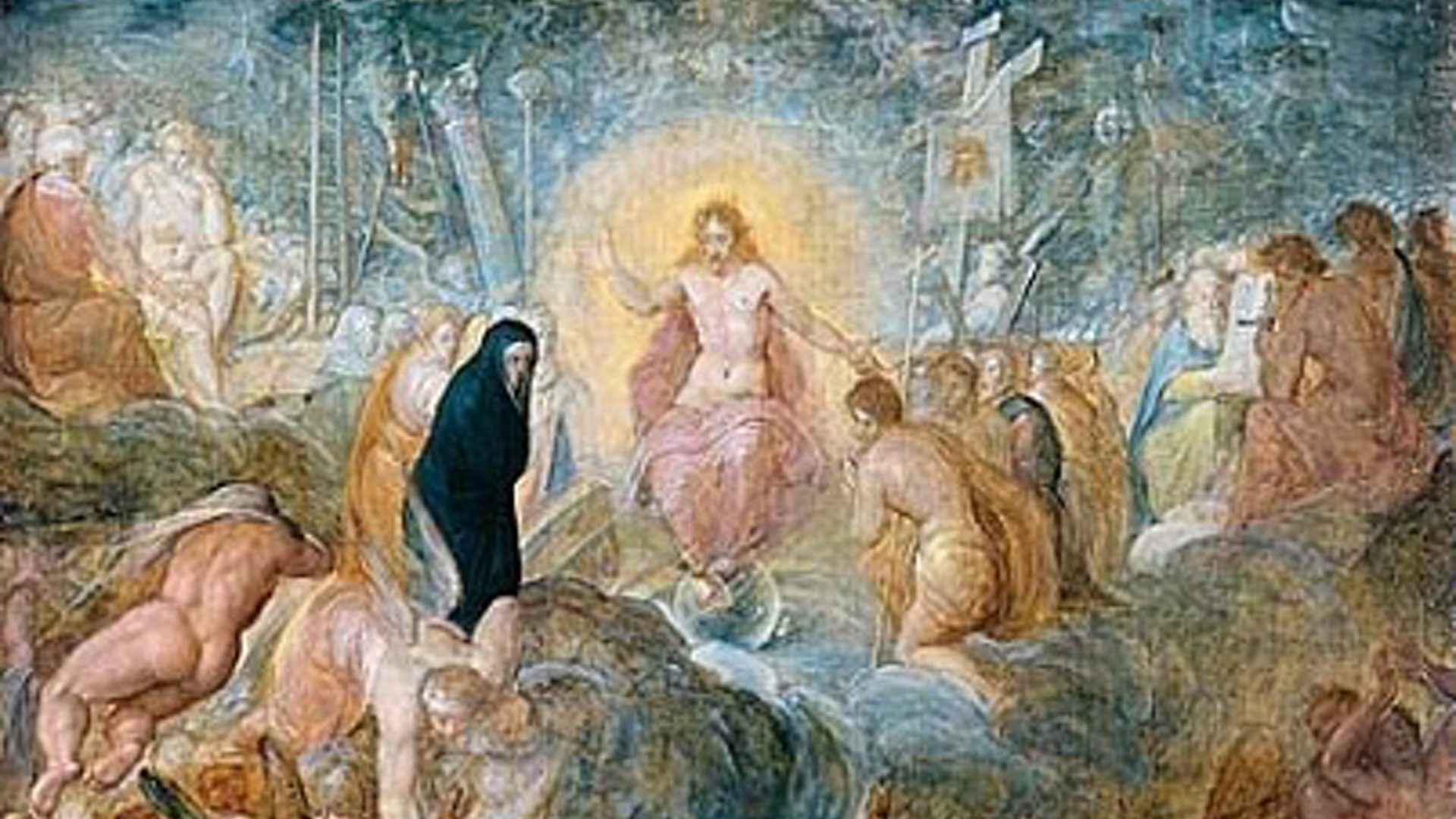
During Jesus’ last week of public ministry on earth, Jesus was sitting with His disciples looking at the Temple when they asked Him about the destruction of the Temple and His second coming. This conversation, called the “Olivet Discourse,” is recorded in all three Synoptic Gospels in Matthew 24, Mark 13, and Luke 21.
Jesus’ teaching about the destruction of the Temple and His second coming have fascinated Christians throughout the centuries. It also is not surprising that sincere believers have come to different conclusions about these secondary, but very significant, topics. My goal in this study is to develop an overview of the main contours of the Olivet Discourse by comparing the Synoptic Gospels accounts of the discourse.
I. Matthew 24, Mark 13, and Luke 21 Should Be Interpreted Together
It is my personal view that Matthew 24, Mark 13, and Luke 21 should be interpreted together. I come to this conclusion for at least three related reasons. First, I hold the view that we should rely on clearer passages of Scripture to interpret less clear passages, which requires me to consider how different passages about related material are connected. Second, because no single Gospel contains all the details of any specific encounter, I see the Gospels as complementary narratives, so I must piece the various details of an encounter together in a coherent way. Third, I am convinced these passages narrate the same encounter, which means I need to consider the various details in all the passages as I seek the correct interpretation.
II. Matthew 24, Mark 13, and Luke 21 Narrate the Same Conversation
Before looking at how the teachings in these passages align with one another, I want to defend my view that these passages narrate the same encounter (not related teachings in different contexts). Why? Because if these are different conversations in different contexts, they may be describing to different events. But if they are the same conversation, then the complementary details give us a fuller picture of the contours of Jesus’ conversation with His disciples. I see at least seven details that suggest to me that Matthew 24, Mark 13, and Luke 21 are narrating the same conversation:
- All three Synoptics narrate this encounter as a conversation between Jesus and His disciples about the beauty of the Temple (Matt 24:1; Mark 13:1, 3; Luke 20:45).
- Matthew and Mark tell us Jesus was with His disciples privately outside the Temple, with Mark specifying they were on the Mount of Olives (Matt 24:3; c.f., Mark 13:3).
- Mark and Luke tell us this conversation happened shortly after Jesus commented on the widow’s two coins (Mark 12:41–44; Luke 21:1–4).
- This conversation happened not long after after Jesus’ testing by, and condemnation of, Israel’s religious leaders (Matt 22–23; Mark 12; Luke 20).
- Mark and Luke both identify the timeframe as days before Passover, with Mark specifying it was two days prior (Mark 14:1; Luke 22:1).
- All three Synoptics follow this conversation with the plot to kill Jesus and Judas’ betrayal of Jesus (Matt 26:1–5, 14–16; Mark 13:1–2, 10–11; Luke 22:2, 3–6).
- Matthew and Mark also recount Jesus’ anointing by Mary at Bethany shortly after this conversation (Matt 26:6–13; Mark 14:3–9).
These seven details—all shared by at least two of the Synoptics, and many by all three—suggest to me that these three conversations narrate the same conversation between Jesus and His disciples. And since these are the same conversation, while there are surely nuances unique to each account, I must interpret these passages alongside one another.
III. Textual Alignment between Matthew 24, Mark 13, and Luke 21
Since I will interpret these passages alongside one another, I need to develop an overview of the contour of Jesus’ teaching. Also, this needs to be my starting point, as it will help me observe the details shared among the Gospels and the details particular to each Gospel.
It makes sense to me organize this process using a table to set the texts side-by-side. I will follow the natural paragraph breaks in my Bible (at least to start) and make note along the way,
A. The Destruction of Jerusalem
I am dividing these chapters into two main parts, each with multiple subsections. The first part introduces the situation and then describes the destruction of Jerusalem. Jesus and His disciples are conversing privately on the Mount of Olives. The disciples were discussing the beauty of the Temple when Jesus foretold its destruction, which would be a future event, at least from the perspective of their conversation. The disciples then asked Jesus about it.
Since Jesus foretells these as future events with reference to their conversation, will use the future tense here for simplicity. It is not my goal in this study to determine which, if any, parts of this conversation have been fulfilled in the past or will be in the future.
1. The Disciples’ Four Questions (Matthew 24:1–3; Mark 13:1–4; Luke 21:5–7)
| Matthew 24:1–3 | Mark 13:1–4 | Luke 21:5–7 |
| 1 Then Jesus went out and departed from the temple, and His disciples came up to show Him the buildings of the temple. 2 And Jesus said to them, “Do you not see all these things? Assuredly, I say to you, not one stone shall be left here upon another, that shall not be thrown down.” | Then as He went out of the temple, one of His disciples said to Him, “Teacher, see what manner of stones and what buildings are here!” 2 And Jesus answered and said to him, “Do you see these great buildings? Not one stone shall be left upon another, that shall not be thrown down.” | 5 Then, as some spoke of the temple, how it was adorned with beautiful stones and donations, He said, 6 “These things which you see—the days will come in which not one stone shall be left upon another that shall not be thrown down.” |
| 3 Now as He sat on the Mount of Olives, the disciples came to Him privately, saying, “Tell us, when will these things be? And what will be the sign of Your coming, and of the end of the age?” | 3 Now as He sat on the Mount of Olives opposite the temple, Peter, James, John, and Andrew asked Him privately, 4 “Tell us, when will these things be? And what will be the sign when all these things will be fulfilled?” | 7 So they asked Him, saying, “Teacher, but when will these things be? And what sign will there be when these things are about to take place?” |
This section introduces the situation. Jesus foretells the destruction of the Temple and the disciples ask Him about it. Because Jesus is answering their questions, it is my view that these questions provide a textual guide to understanding Jesus’ answer. Properly distinguishing their questions and Jesus’ answers, then, is key to following Jesus’ teaching.
I see four questions in the text:
- When will the Jerusalem be destroyed (Matt, Mark, Luke)?
- What is the sign of Jesus’ coming (Matt)?
- What is the sign of the end of the age when these things will be fulfilled (Matt, Mark)?
- What sign will precede the destruction of Jerusalem (Luke)?
These are the questions I will use as a basis for distinguishing the teaching that follows.
Note that the first question is common to all three Synoptics. But questions 2–4 are distinct among the narratives. This makes me wonder if some parts of each narrative are describing similar but distinct events. For now, I will treat similar descriptions as the same events.
Also, Part I seems to be answering questions 1 and 4, whereas Part II (below) seems to be answering questions 2–3.
2. The Beginnings of Sorrows (Matthew 24:4–8; Mark 13:5–8; Luke 21:8–11)
| Matthew 24:4–8 | Mark 13:5–8 | Luke 21:8–11 |
| 4 And Jesus answered and said to them: “Take heed that no one deceives you. 5 For many will come in My name, saying, ‘I am the Christ,’ and will deceive many. 6 And you will hear of wars and rumors of wars. See that you are not troubled; for all these things must come to pass, but the end is not yet. | 5 And Jesus, answering them, began to say: “Take heed that no one deceives you. 6 For many will come in My name, saying, ‘I am He,’ and will deceive many. 7 But when you hear of wars and rumors of wars, do not be troubled; for such things must happen, but the end is not yet. | 8 And He said: “Take heed that you not be deceived. For many will come in My name, saying, ‘I am He,’ and, ‘The time has drawn near.’ Therefore do not go after them. 9 But when you hear of wars and commotions, do not be terrified; for these things must come to pass first, but the end will not come immediately.” |
| 7 For nation will rise against nation, and kingdom against kingdom. And there will be famines, pestilences, and earthquakes in various places. 8 All these are the beginning of sorrows. | 8 For nation will rise against nation, and kingdom against kingdom. And there will be earthquakes in various places, and there will be famines and troubles. These are the beginnings of sorrows. | 10 Then He said to them, “Nation will rise against nation, and kingdom against kingdom. 11 And there will be great earthquakes in various places, and famines and pestilences; and there will be fearful sights and great signs from heaven. |
This section foretells the “beginning of sorrows” (Matt/Mark). Jesus says many false prophets will come claiming to be the Messiah and that the time of fulfillment has come. Also, during this time, the world will suffer widespread food shortages, devastating diseases, and natural disasters.
3. The Persecution of the Saints (Matthew 24:9–14; Mark 13:11–13; Luke 21:12–19)
| Matthew 24:9–14 | Mark 13:11–13 | Luke 21:14–19 |
| 9 “Then they will deliver you up to tribulation and kill you, and you will be hated by all nations for My name’s sake. … 14 And this gospel of the kingdom will be preached in all the world as a witness to all the nations, and then the end will come. | 9 “But watch out for yourselves, for they will deliver you up to councils, and you will be beaten in the synagogues. You will be brought before rulers and kings for My sake, for a testimony to them. 10 And the gospel must first be preached to all the nations. | 12 But before all these things, they will lay their hands on you and persecute you, delivering you up to the synagogues and prisons. You will be brought before kings and rulers for My name’s sake. 13 But it will turn out for you as an occasion for testimony. |
| 11 But when they arrest you and deliver you up, do not worry beforehand, or premeditate what you will speak. But whatever is given you in that hour, speak that; for it is not you who speak, but the Holy Spirit. | 14 Therefore settle it in your hearts not to meditate beforehand on what you will answer; 15 for I will give you a mouth and wisdom which all your adversaries will not be able to contradict or resist. | |
| 10 And then many will be offended, will betray one another, and will hate one another. 11 Then many false prophets will rise up and deceive many. 12 And because lawlessness will abound, the love of many will grow cold. 13 But he who endures to the end shall be saved. | 12 Now brother will betray brother to death, and a father his child; and children will rise up against parents and cause them to be put to death. 13 And you will be hated by all for My name’s sake. But he who endures to the end shall be saved. | 16 You will be betrayed even by parents and brothers, relatives and friends; and they will put some of you to death. 17 And you will be hated by all for My name’s sake. 18 But not a hair of your head shall be lost. 19 By your patience possess your souls. |
This section foretells the persecution of the saints. During this time, the world will witness widespread lawlessness, unlovingness, and will hate and move against the saints.
Matthew calls this time “tribulation” and seems to say it will happen after the “beginning of sorrows” (“then,” Matt 24:9). Luke calls it the “days of vengeance” and the “time of the Gentiles,” and seems to say it will happen “before” (Luke 21:12, 22, 24). This makes me wonder if they are speaking of the same timeframe by different names or if they are describing different yet similar events.
4. The Abomination of Desolation (Matthew 24:15–26; Mark 13:14–21; Luke 21:20–24)
| Matthew 24:15–26 | Mark 13:14–23 | Luke 21:20–24 |
| 15 “Therefore when you see the ‘abomination of desolation,’ spoken of by Daniel the prophet, standing in the holy place” (whoever reads, let him understand), 16 “then let those who are in Judea flee to the mountains. 17 Let him who is on the housetop not go down to take anything out of his house. 18 And let him who is in the field not go back to get his clothes. | 14 “So when you see the ‘abomination of desolation,’ spoken of by Daniel the prophet, standing where it ought not” (let the reader understand), “then let those who are in Judea flee to the mountains. 15 Let him who is on the housetop not go down into the house, nor enter to take anything out of his house. 16 And let him who is in the field not go back to get his clothes. | 20 “But when you see Jerusalem surrounded by armies, then know that its desolation is near. 21 Then let those who are in Judea flee to the mountains, let those who are in the midst of her depart, and let not those who are in the country enter her. |
| 22 For these are the days of vengeance, that all things which are written may be fulfilled. | ||
| 19 But woe to those who are pregnant and to those who are nursing babies in those days! 20 And pray that your flight may not be in winter or on the Sabbath. 21 For then there will be great tribulation, such as has not been since the beginning of the world until this time, no, nor ever shall be. | 17 But woe to those who are pregnant and to those who are nursing babies in those days! 18 And pray that your flight may not be in winter. 19 For in those days there will be tribulation, such as has not been since the beginning of the creation which God created until this time, nor ever shall be. | 23 But woe to those who are pregnant and to those who are nursing babies in those days! For there will be great distress in the land and wrath upon this people. |
| 22 And unless those days were shortened, no flesh would be saved; but for the elect’s sake those days will be shortened. | 20 And unless the Lord had shortened those days, no flesh would be saved; but for the elect’s sake, whom He chose, He shortened the days. | |
| 23 “Then if anyone says to you, ‘Look, here is the Christ!’ or ‘There!’ do not believe it. 24 For false christs and false prophets will rise and show great signs and wonders to deceive, if possible, even the elect. 25 See, I have told you beforehand. 26 “Therefore if they say to you, ‘Look, He is in the desert!’ do not go out; or ‘Look, He is in the inner rooms!’ do not believe it. | 21 “Then if anyone says to you, ‘Look, here is the Christ!’ or, ‘Look, He is there!’ do not believe it. 22 For false christs and false prophets will rise and show signs and wonders to deceive, if possible, even the elect. 23 But take heed; see, I have told you all things beforehand. | 24 And they will fall by the edge of the sword, and be led away captive into all nations. And Jerusalem will be trampled by Gentiles until the times of the Gentiles are fulfilled. |
Jesus says the “desolation (of abomination)” (Matt/Mark/Luke) will come after Jerusalem is “surrounded by armies” (Luke). This is the sign that the “days of vengeance” (Luke) are about to begin. When Jerusalem is destroyed, the Jewish people will be dispersed throughout the nations and “false christs and false prophets will rise … to deceive” many. This is the “time of the Gentiles” (Luke), which will see the Gospel of the Kingdom preached to all nations (Matt/Mark) and then “the end [of the age] will come” (Matt; cf., Matt 24:3).
B. The Second Coming of Christ
This part of Jesus’ answer focuses on questions 2 and 3. The second coming of Jesus takes centerstage, followed by illustrations and closing warnings to live watchfully for Christ’s return.
1. The Coming of the Son of Man (Matthew 24:27–31; Mark 13:24–27; Luke 21:25–28)
| Matthew 24:27–31 | Mark 13:24–27 | Luke 21:25–28 |
| 27 For as the lightning comes from the east and flashes to the west, so also will the coming of the Son of Man be. 28 For wherever the carcass is, there the eagles will be gathered together. 29 “Immediately after the tribulation of those days the sun will be darkened, and the moon will not give its light; the stars will fall from heaven, and the powers of the heavens will be shaken. | 24 “But in those days, after that tribulation, the sun will be darkened, and the moon will not give its light; 25 the stars of heaven will fall, and the powers in the heavens will be shaken. | 25 “And there will be signs in the sun, in the moon, and in the stars; and on the earth distress of nations, with perplexity, the sea and the waves roaring; 26 men’s hearts failing them from fear and the expectation of those things which are coming on the earth, for the powers of the heavens will be shaken. |
| 30 Then the sign of the Son of Man will appear in heaven, and then all the tribes of the earth will mourn, and they will see the Son of Man coming on the clouds of heaven with power and great glory. 31 And He will send His angels with a great sound of a trumpet, and they will gather together His elect from the four winds, from one end of heaven to the other. | 26 Then they will see the Son of Man coming in the clouds with great power and glory. 27 And then He will send His angels, and gather together His elect from the four winds, from the farthest part of earth to the farthest part of heaven. | 27 Then they will see the Son of Man coming in a cloud with power and great glory. |
| 28 Now when these things begin to happen, look up and lift up your heads, because your redemption draws near.” |
This section describes Jesus’ return. The “sign(s) of the Son of Man” (Matt) will be seen in the heavens and on earth. All will see Christ’s return “in a cloud with power and great glory” (Luke) and “His angels” will “gather together His elect” (Matt/Mark) throughout heaven and earth.
The description of the Son returning on the clouds reminds me of Acts 1:9–11, where the disciples watched Jesus ascend to heaven and then two heavenly beings tell the disciples that Jesus “will so come in like manner.”
It also reminds me of Revelation 19:11–21, where Jesus returns to declare victory over “the beast, the kings of the earth, and their armies.”
2. The Parable of the Fig Tree (Matthew 24:32–35; Mark 13:28–31; Luke 21:29–33)
| Matthew 24:32–35 | Mark 13:28–31 | Luke 21:29–33 |
| 32 “Now learn this parable from the fig tree: When its branch has already become tender and puts forth leaves, you know that summer is near. 33 So you also, when you see all these things, know that it is near—at the doors! 34 Assuredly, I say to you, this generation will by no means pass away till all these things take place. 35 Heaven and earth will pass away, but My words will by no means pass away. | 28 “Now learn this parable from the fig tree: When its branch has already become tender, and puts forth leaves, you know that summer is near. 29 So you also, when you see these things happening, know that it is near—at the doors! 30 Assuredly, I say to you, this generation will by no means pass away till all these things take place. 31 Heaven and earth will pass away, but My words will by no means pass away. | 29 Then He spoke to them a parable: “Look at the fig tree, and all the trees. 30 When they are already budding, you see and know for yourselves that summer is now near. 31 So you also, when you see these things happening, know that the kingdom of God is near. 32 Assuredly, I say to you, this generation will by no means pass away till all things take place. 33 Heaven and earth will pass away, but My words will by no means pass away. |
This section contains the Parable of the Fig Tree, which all three Synoptics narrate very similarly. Jesus teaches that “when you see these things happening … the Kingdom of God is near” (Luke) and “this generation will not pass away til all these things take place” (Matt/Mark/Luke). I am wondering if this parable refers to “all” (Matt) of Jesus’ answer or only the immediately preceding signs of the Second Coming.
I also have several other questions about this section:
- These signs indicating “the Kingdom of God is near” (“near” NOT “here,” Luke)?
- The identity of “this generation”?
- The temporal relationship between “these things” and “heaven and earth will pass away?”
- Are all these events one right after another, or are there breaks between some of them?
3. The Illustration of Noah (Matthew 24:36–42)
| Matthew 24:36–42 | ||
| 36 “But of that day and hour no one knows, not even the angels of heaven, but My Father only. 37 But as the days of Noah were, so also will the coming of the Son of Man be. 38 For as in the days before the flood, they were eating and drinking, marrying and giving in marriage, until the day that Noah entered the ark, 39 and did not know until the flood came and took them all away, so also will the coming of the Son of Man be. 40 Then two men will be in the field: one will be taken and the other left. 41 Two women will be grinding at the mill: one will be taken and the other left. 42 Watch therefore, for you do not know what hour your Lord is coming. |
The illustration of Noah is unique to Matthew. Jesus summarizes the illustration plainly in verse 44 (see below) with the idea that His return will be unexpected.
Regarding the sign of Noah, I find myself agreeing with John Walvoord, Louis A. Barbieri, Jr., Craig Blomberg, and others.1 The sign of Noah is judgment against the wicked, who “will be taken,” while the righteous in Christ will be “left.” During the Flood, the world ignored Noah’s work on the Ark. And when the floods came, the wicked were swept away and only righteous Noah and his family were preserved. Similarly, people will be going about their ordinary business when Christ returns in judgment, at which time the wicked on earth will immediately be “taken away” in judgment, suffering death and receiving their eternal state.
4. The Warning to Watch (Matthew 24:43–51; Mark 13:32–37; Luke 21:34–38)
| Matthew 24:43–51 | Mark 13:32–37 | Luke 21:32–37 |
| 43 But know this, that if the master of the house had known what hour the thief would come, he would have watched and not allowed his house to be broken into. 44 Therefore you also be ready, for the Son of Man is coming at an hour you do not expect. | 32 “But of that day and hour no one knows, not even the angels in heaven, nor the Son, but only the Father. 33 Take heed, watch and pray; for you do not know when the time is. | 32 “But of that day and hour no one knows, not even the angels in heaven, nor the Son, but only the Father. 33 Take heed, watch and pray; for you do not know when the time is. |
| 45 “Who then is a faithful and wise servant, whom his master made ruler over his household, to give them food in due season? 46 Blessed is that servant whom his master, when he comes, will find so doing. 47 Assuredly, I say to you that he will make him ruler over all his goods. 48 But if that evil servant says in his heart, ‘My master is delaying his coming,’ 49 and begins to beat his fellow servants, and to eat and drink with the drunkards, 50 the master of that servant will come on a day when he is not looking for him and at an hour that he is not aware of, 51 and will cut him in two and appoint him his portion with the hypocrites. There shall be weeping and gnashing of teeth. | 34 It is like a man going to a far country, who left his house and gave authority to his servants, and to each his work, and commanded the doorkeeper to watch. 35 Watch therefore, for you do not know when the master of the house is coming—in the evening, at midnight, at the crowing of the rooster, or in the morning—36 lest, coming suddenly, he find you sleeping. 37 And what I say to you, I say to all: Watch!” | 34 It is like a man going to a far country, who left his house and gave authority to his servants, and to each his work, and commanded the doorkeeper to watch. 35 Watch therefore, for you do not know when the master of the house is coming—in the evening, at midnight, at the crowing of the rooster, or in the morning—36 lest, coming suddenly, he find you sleeping. 37 And what I say to you, I say to all: Watch!” |
This section concludes the Olivet Discourse in Mark and Luke. In Matthew, Jesus continues with three parables. I do think the parables are significant to understanding Matthew’s account. But I do not think they change the overall contour of the discourse, so I have not included them here.
Jesus concludes His discourse warning the disciples to be watchful for His return (with three additional parables in Matthew). Jesus stresses the importance of faithful servanthood. Jesus’ will return will come unexpectedly. Therefore, Jesus instructs His disciples to live as if He might return at any moment.
IV. Outlining the Flow of Jesus’ Conversation with the Disciples
Having aligned the texts, I will conclude this study by bringing these details together into a cohesive outline and making note of my questions along the way.
A. General Contour of the Olivet Discourse
A. The Destruction of Jerusalem (Matt 24:1–26; Mark 13:1–23; Luke 21:1–24)
- The Disciples’ Four Questions (Matthew 24:1–3; Mark 13:1–4; Luke 21:5–7)
- The Beginnings of Sorrows (Matthew 24:4–8; Mark 13:5–8; Luke 21:8–11)
- The Persecution of the Saints (Matthew 24:9–14; Mark 13:11–13; Luke 21:12–19)
- The Abomination of Desolation (Matthew 24:15–26; Mark 13:14–21; Luke 21:20–24)
B. The Second Coming of Christ (Matt 24:27–51; Mark 13:24–37; Luke 21:25–37)
- The Coming of the Son of Man (Matthew 24:27–31; Mark 13:24–27; Luke 21:25–28)
- The Parable of the Fig Tree (Matthew 24:32–35; Mark 13:28–31; Luke 21:29–33)
- The Illustration of Noah (Matthew 24:36–42)
- The Warning to Watch (Matthew 24:43–51; Mark 13:32–37; Luke 21:34–38)
B. My Questions about the Olivet Discourse
- Are Matthew’s “tribulation” (24:9) and Luke’s “days of vengeance”/“times of the Gentiles” (21:22, 24) referring to the same events by different names or similar but different events? Why?
- In the Parable of the Fig Tree, are “all (these) things” (Matt 24:33–34; Mark 13:29–30; Luke 21:31–32) referring to everything Jesus foretold or only those immediately preceding signs of Jesus’ return?
- In the Parable of the Fig Tree, it significant that Luke says “the Kingdom of God is near” not “here” (21:31)?
- In the Parable of the Fig Tree, what is the identity of “this generation” (Matt 24:34, Mark 13:30, Luke 21:32)?
- In the Parable of the Fig Tree, what is the temporal relationship between “these things” and “heaven and earth will pass away?”
- Are we to see all the events Jesus foretells in the Olivet Discourse occurring one right after another, or are there undefined spans of time between some of them?
Notes
- John F. Walvoord, Matthew: Thy Kingdom Come (Grand Rapids, MI: Kregel, 1998), 193. Logos Bible Software. Louis A. Barbieri Jr., “Matthew,” in The Bible Knowledge Commentary: An Exposition of the Scriptures: New Testament, ed. John F. Walvoord and Roy B. Zuck, (Wheaton, IL: Victor Books, 1985), 79. Logos Bible Software. Craig Blomberg, Matthew, The New American Commentary 22 (Nashville: Broadman & Holman, 1992), 366. Logos Bible Software.
Files
If you would like to download this study, I have included a printable PDF version of my study notes below.
Discover more from Tim Northup
Subscribe to get the latest posts sent to your email.
 Tim Northup
