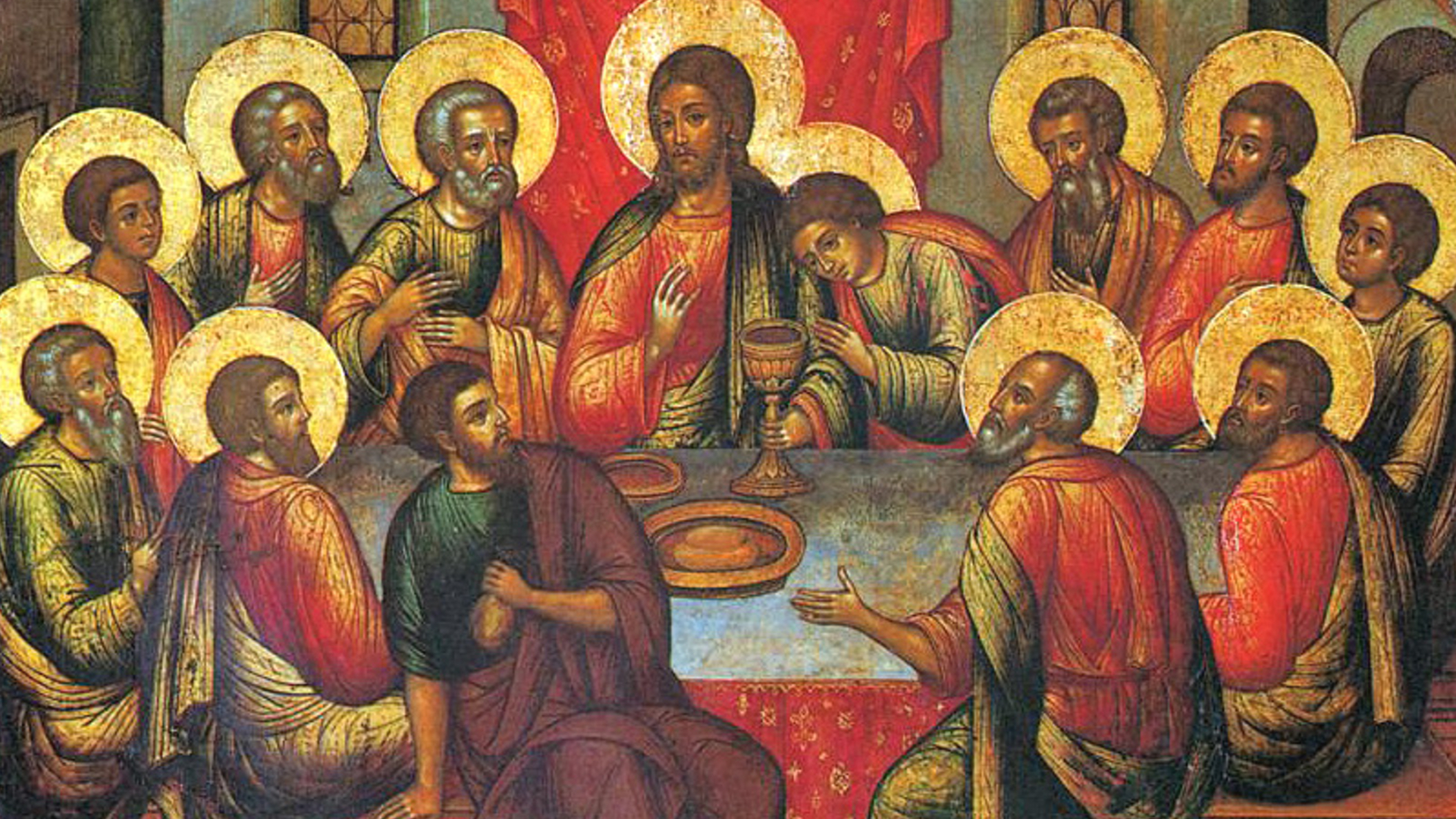
And He said to them, “The kings of the Gentiles exercise lordship over them, and those who exercise authority over them are called ‘benefactors.’ But not so among you; on the contrary, he who is greatest among you, let him be as the younger, and he who governs as he who serves. For who is greater, he who sits at the table, or he who serves? Is it not he who sits at the table? Yet I am among you as the One who serves. (Luke 22:25–27)
Luke 22 brings us to the Day of Unleavened Bread, “when the Passover [Lamb] must be killed” (Luke 22:7). Sometime during the few days leading up to this one, two important, parallel events happened involving two of Jesus’ closest followers.
One of these events was Jesus’ anointing at Bethany. While Jesus was staying at Simon’s house in Bethany (Matt 26:6), Mary of Bethany anointed Jesus with “a pound of very costly oil of spikenard” (John 12:3). When Mary anointed Jesus using this very costly, fragrant perfume, she showed her deep, wholehearted love and devotion toward Jesus.1 Note that this is the same Mary whom Luke recorded sitting at Jesus’ feet listening intently to His teaching earlier in his Gospel narrative (Luke 10:38–42).
The second event was Judas Iscariot’s arrangements to betray Jesus. At some point in the days leading up to Passover, Judas slipped away alone and agreed to privately deliver Jesus over to the chief priests for 30 pieces of silver (Matt 26:15). This is the blood price of a servant under Mosaic Law (Exod 21:32), as well as an allusion to Zechariah’s prophecy that God would give Israel over to neighboring nations for forsaking her Shepherd (Zech 11:10).
Matthew places these events side-by-side, contrasting the devotion of Mary with the betrayal of Judas. Mary cherished her Lord, sparing neither expense nor humility to honor Jesus. Judas, in contrast, whom Jesus called by name with the rest of the Twelve (Luke 6:16), betrayed his Lord for the blood price of a servant. Note that it was important to the chief priests to take Jesus privately, because they “feared the people” (Luke 22:2; c.f., John 11:45–57).
When we consider Mary’s devotion and Judas’ betrayal side-by-side, we find a very important lesson about discipleship—true followers of Jesus, motivated by love, are devoted to serving Jesus; false disciples, motivated by fear, expect Jesus to serve their own desires.
Scripture does not reveal Judas’ motivations for betraying Jesus. One theologian summarizes two major views, “Why Judas succumbed has been the object of great speculation. Some suggest that he was disappointed that Jesus did not set up an earthly kingdom, while others argue that he was covetous, since he received money for his services.”2 Whatever Judas’ intentions, Scripture reveals that Satan was the ultimate influence behind Judas’ betrayal.
Scripture does not reveal Judas’ intentions, but it does reveal an important truth—it is possible to live alongside Jesus and labor among His people without receiving salvation. Indeed, Judas’ betrayal “shows that standing close to Jesus does not in itself guarantee spiritual success if the heart is not allied properly to God.”3 Following Jesus isn’t just about proximity, but presence. True disciples do not merely acknowledge Jesus’ nearness; they receive by faith His life-changing presence in their hearts and lives.
One of the marks of a true disciple is obedient surrender to the words and ways of Jesus (1 John 5:2–3). Commitment to His commandments is the heart-and-life change that comes through faith by the inner working of the Holy Spirit. This is the spiritual rebirth required to enter the Kingdom of God (John 3:5). Such obedience flows from a deep love for God and His Creation, including other people (Mark 12:28–31).
Jesus taught His disciples during the Passover meal that such loving, obedient surrender takes the form of a servant. Then He showed them by taking the lowliest place in the household and washing their feet (John 13:1–20). This symbol of sanctification is not for the lost of the world, but for “he who is bathed,” i.e., who is already born of the Spirit (v. 10). Thus, serving the world begins with sharing the Good News of spiritual rebirth through faith in Jesus by teaching them the way of loving, obedience surrender to Him (Matt 28:19–20).
Reader—there is no hope for eternal life apart from Jesus Christ. Our sinfulness assures eternal separation from God (i.e., eternal death). But God, in His great love, has given us His Son, Jesus Christ, who put on flesh, endured temptation, died the death we all deserve, and rose victoriously from the grave that we might inherit resurrection and eternal life with Him. Will you put your trust in Jesus today?
Christian—living alongside Jesus and laboring among His people does not ensure our salvation. Have you been living like a Judas or a Mary? Or somewhere in the muddy middle? Jesus is standing at the door to your heart, seeking to commune with you spiritually every moment of every day (Rev 3:20). Will you let Him in so He can renew your faith, hope, and love in Him?
Notes
- D. A. Carson, The Gospel according to John, The Pillar New Testament Commentary (Grand Rapids, MI: Eerdmans, 1991), 428. Logos Bible Software.
- Darrell L. Bock, Luke: 9:51–24:53, vol. 2, Baker Exegetical Commentary on the New Testament (Grand Rapids, MI: Baker Academic, 1996), 1704. Logos Bible Software.
- Ibid.
Discover more from Tim Northup
Subscribe to get the latest posts sent to your email.
 Tim Northup
