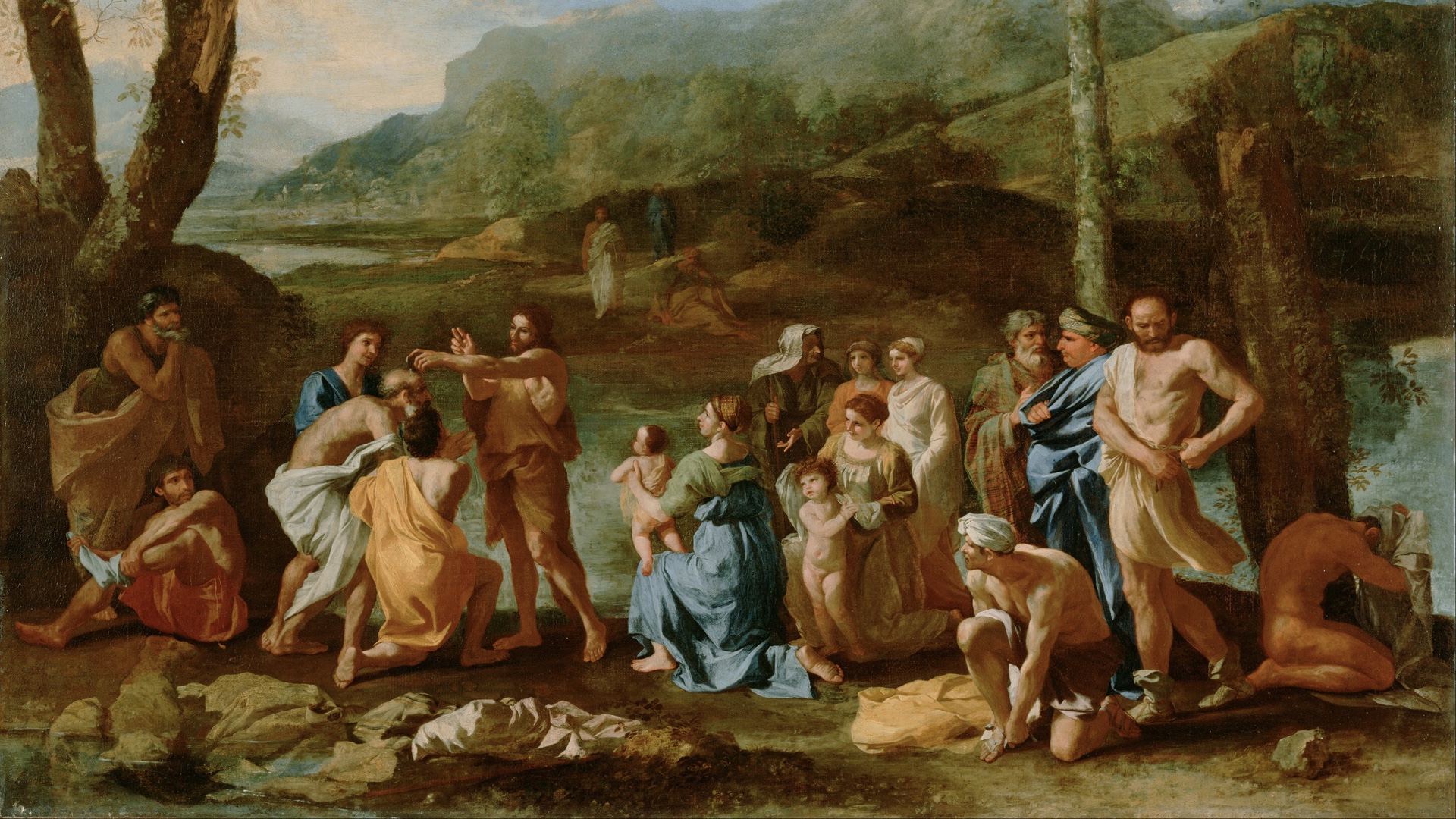
I indeed baptize you with water unto repentance, but He who is coming after me is mightier than I, whose sandals I am not worthy to carry. He will baptize you with the Holy Spirit and fire. (Matt 3:11; NKJV)
Water baptism is an ancient and enduring Christian tradition. Through the centuries, churches have come to understand and practice baptism differently, sometimes breaking fellowship over it. What is baptism? What does the Bible say about baptism? Any biblical doctrine of baptism must begin by answering these questions. Let’s dig in.
The word ‘baptize’ comes from its Greek counterpart βαπτίζω. Its basic meaning is “to immerse, dip, submerge.”1 ‘Baptism’ (βάπτισμα) occurs 22 times in the New Testament, 18 times in the Gospels and Acts (NKJV). The verb form ‘baptize’ (βαπτίζω) occurs another 80 times in the New Testament, 70 in the Gospels and Acts. The adjective form ‘baptist’ (βαπτιστής) occurs 14 times in the New Testament, always referring to John the Baptist.
The first baptism the New Testament mentions is that performed by John (Matt 3:6–7). The Gospels tell us that John came in the spirit and power of Elijah as the forerunner to the Christ (Luke 1:17). John’s baptism symbolized repentance in preparation to receive the promised Messiah (Luke 3:3–6). It involved submersion by water but was not the same as the baptism instructed by Jesus at His Ascension (Matt 28:19; Acts 19:1–7).
The second baptism in the New Testament is that which John promised would be performed by Christ with the Holy Spirit and fire (Matt 3:11). It is not clear whether this is one baptism or two. Neither is it clear whether it refers to Pentecost, judgment, or both. The context suggests the fire symbolizes judgment (Matt 3:12). Whether this is a single baptism (judgment)2 or two different baptisms (Pentecost and judgment)3 is debated.
The third baptism mentioned in the New Testament is when Jesus approached John to be baptized (Matt 3:13). This baptism was symbolic, as the conversation between Jesus and John shows us (Matt 3:14–15). It identifies Jesus with John’s ministry, Israel’s long-awaited Messiah, and announces God’s identification of Jesus as that Messiah (Matt 3:16–17). After this event, Jesus endured the wilderness temptation and then began His earthly ministry (Matt 4).
The fourth baptism in the New Testament comes when Jesus asks the brothers James and John if they can “be baptized with the baptism that I am baptized with,” (Matt 20:22). The image of baptism, parallel with the cup, signifies Jesus’ suffering and death (Mark 14:36). When Jesus was baptized, He identified His ministry with repentance. Jesus’ suffering and death atoned for our sins and appeased God’s judgment. We respond in faith and repentance.
The fifth baptism in the New Testament describes a Jewish practice of ceremonial washing. This is mentioned in Mark 7:4, where the Jewish leaders criticized Jesus’ disciples for not washing (βαπτίζω) before eating. This illustrates the literal meaning of the Greek word as dipping or immersion. A lot of English translations use ‘wash’ instead of ‘baptize,’ which makes more sense nowadays given the doctrinal connotations of baptism.
The sixth baptism in the New Testament describes baptizing disciples of Jesus. This comes in Jesus’ instructions to the Eleven before His Ascension (Matt 28:19–20). We then read about the Disciples carrying out this instruction in the book of Acts (for example, Acts 2:38–41; 8:12–13). Water baptism symbolizes spiritually dying to sin and raising to new life (Rom 6:4). Water baptism was one of many issues in the Corinthian church (1 Cor 1:13–17).
The seventh baptism the New Testament mentions is baptism by the Holy Spirit. This baptism may be one John promised through Jesus by the Holy Spirit. Baptism by the Spirit began at Pentecost (Acts 1:5). It unites us with other believers as brothers and sisters in Christ (1 Cor 12:13). Baptism by the Spirit is not the same as speaking in tongues or prophesying, although in Acts they sometimes happened simultaneously (see Acts 2:4; 10:46).
The New Testament has a lot to say about baptism. In fact, the study above shows there are seven kinds of baptism. With so many different kinds of baptism, it is especially important to look at which kind a verse or passage is talking about. The two kinds of baptism that usually raise the most questions are water baptism with salvation and baptism by the Holy Spirit. I hope to look at each of these more in depth in later posts.
Notes
- Franco Montanari, The Brill Dictionary of Ancient Greek, English ed., ed. Madeleine Goh and Chad Schroeder (Boston, MA: Brill, 2015), s.v. “βαπτίζω.” Logos Bible Software.
- David L. Turner, Matthew, Baker Exegetical Commentary on the New Testament (Grand Rapids, MI: Baker Academic, 2008), 115. Logos Bible Software.
- John F. Walvoord, Matthew: Thy Kingdom Come, A Commentary on the First Gospel (Grand Rapids, MI: Kregel, 1998), 32. Logos Bible Software.
Discover more from Tim Northup
Subscribe to get the latest posts sent to your email.
 Tim Northup
