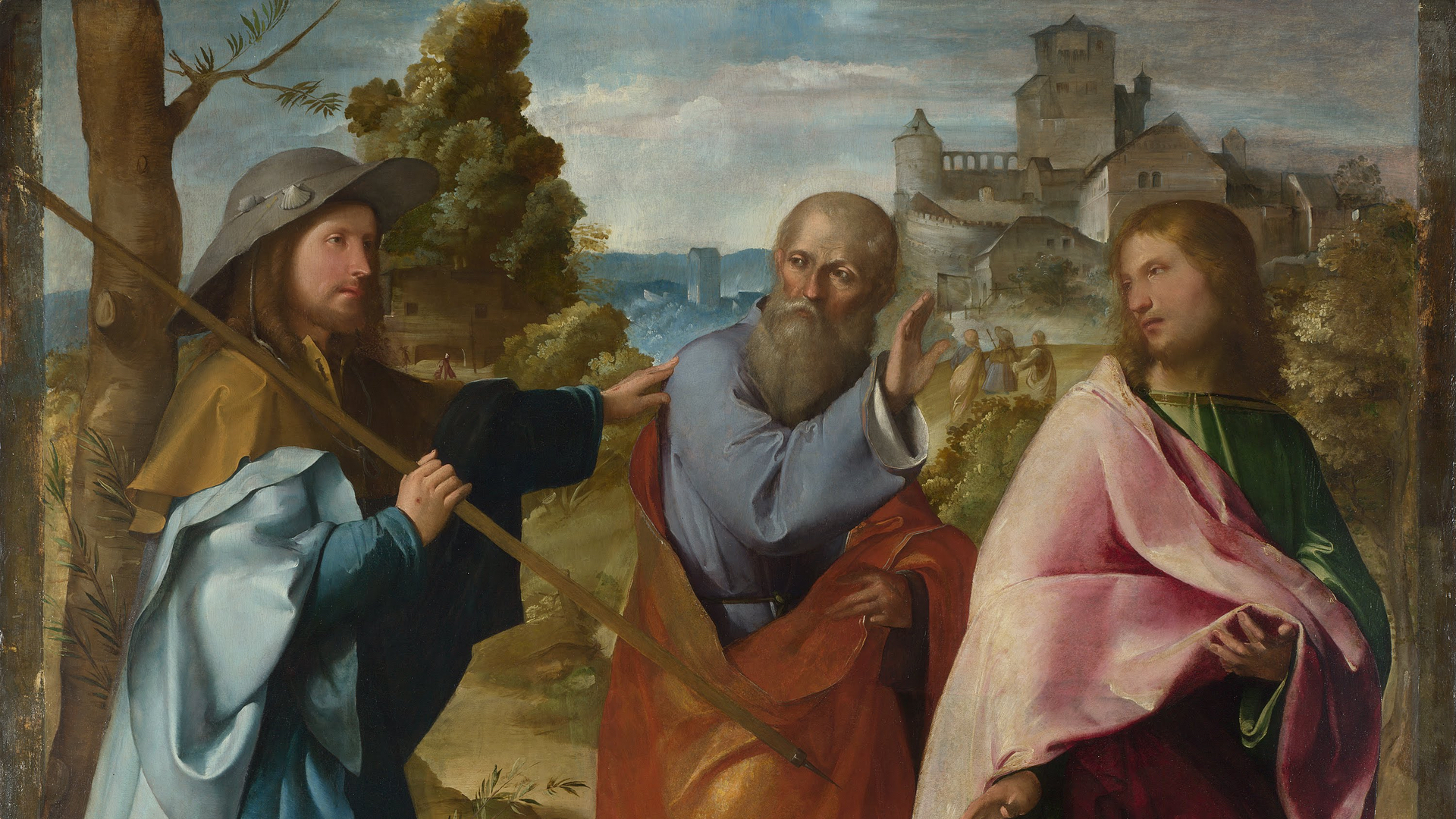
Now behold, two of them were traveling that same day to a village called Emmaus, which was seven miles from Jerusalem. And they talked together of all these things which had happened. So it was, while they conversed and reasoned, that Jesus Himself drew near and went with them. (Luke 24:13–15, NKJV)
The early morning sun crested over the horizon on the first day of the week. It was now the third day since Jesus was crucified, killed, and buried. A small group of faithful women, followers of Jesus, brought spices they had prepared to the tomb (Luke 24:2).
The four Gospels together give us a robust picture of what these women experienced. Matthew tells us that Mary Magdalene and the other Mary witnessed a great earthquake and the tomb stone being rolled away by an angel (Matt 28:1–3). Mark adds that this other Mary was Mary the mother of James, and Salome was with them (Mark 16:1). Luke adds Joanna to their party, as well as the number and description of angels (Luke 24:4, 10).
After an alarming conversation with the heavenly messengers, the women fled the tomb and told the Eleven what happened (Mark 16:5–8). Peter and John then ran to the tomb, confirming that Jesus’ body was gone (John 20:3–10). The tomb was empty—all that remained were the linen cloths and handkerchief that had bound the body of their Lord (John 20:6–7).
Later that day, two of Jesus’ followers were traveling the road from Jerusalem to Emmaus. Their journey was seven miles, making it within a day’s travel of Jerusalem there and back.1 Luke provides the only detailed account of this journey, and names only one of the disciples, Cleopas. The risen Jesus drew near and joined them, but they did not recognize Him.
Jesus listened to their longings and losses about recent events. They saw Jesus as the promised Prophet, “mighty in deed and word before God and all the people,” whom they believed had come “to redeem Israel” (vv. 19, 21). This refers to the prophecy of a Prophet like Moses (Deut 18:15:18), which remained unfulfilled at the close of the Old Testament canon (Deut 34:10–12). But their hope was shattered and they were struggling to make sense of what happened to Jesus.
Only after listening did Jesus interject. His response was pointed, yet patient. He called attention to their lack of understanding and belief, suggesting that they should have understood these things.2 But He did not leave them in their ignorance and unbelief. He walked with them the rest of the way to Emmaus, explaining the Old Testament prophecies about Himself (vv. 25–27).
Notice, as the disciples set their hearts and minds on the spiritual, Jesus drew near. And as they struggled to make sense of what had happened, Jesus walked with them. Still, it was not until they opened their home to him that “their eyes were opened and they knew Him” (v. 31).
In this divine encounter on the road to Emmaus, Luke gives us a metaphor for the spiritual life. How often do we give thought to spiritual things? For most of us, not nearly often enough. But regardless of our focus, Jesus draws near. When we do think about spiritual things, how often do we struggle to understand? God has revealed Himself to us in both Creation and His Word. But apart from divine intervention, we cannot understand.
The disciples did not recognize Jesus until they extended hospitality by inviting Him to dine with them. Similarly, we can only begin to believe in God and see Him working in our lives when we open our hearts and minds to a relationship with Him. God is always near, inviting us into relationship with His Son (John 6:44). But He also gives us freedom to resist the Holy Spirit’s leading and remain in sinful unbelief (Acts 7:51–53).
Trusting Jesus is a gift from above. Yet, we must receive it voluntarily. The divine mystery of the connection between faith and will has spurred many theological debates throughout history. But it need not be a barrier to experiencing fellowship with Jesus. In the disciples’ hopeless unbelief, Jesus drew near. When they opened their hearts, Jesus opened their understanding to believe.
If you have not yet trusted in Jesus, I encourage you today—open your heart to the possibility of His presence, that He might open your mind to believe in Him and breath new life in your soul. And if you have already trusted in Jesus, open your heart anew to His active presence in your life, that He might reinvigorate your mind and soul with a renewed sense of eternity with Him.
Notes
- John T. Carroll, Luke: A Commentary (Louisville, KY: Westminster John Knox, 2012), 483. Logos Bible Software.
- John A. Martin, “Luke,” in The Bible Knowledge Commentary: An Exposition of the Scriptures: New Testament, ed. John F. Walvoord and Roy. B. Zuck (Wheaton, IL: Victor Books, 1985), 264. Logos Bible Software.
Discover more from Tim Northup
Subscribe to get the latest posts sent to your email.
 Tim Northup
