
The Narrow Gate

And He went through the cities and villages, teaching, and journeying toward Jerusalem. Then one said to Him, “Lord, are there few who are saved?” And He said to them, “Strive to enter through the narrow gate, for many, I say to you, will seek to enter and will not be able. (Luke 13:22–24; NKJV)

In Luke chapter 13, Jesus continues teaching about what following Him looks like in daily life, focusing on the connection between Kingdom membership and following Him. Jesus makes clear that not everyone who thinks they are a Christian will inherit eternity with Him.

Continue reading
The Parable of the Unjust Steward

“And I say to you, make friends for yourselves by unrighteous mammon, that when you fail, they may receive you into an everlasting home. He who is faithful in what is least is faithful also in much; and he who is unjust in what is least is unjust also in much.” (Luke 16:9–10; NKJV)

Some things in Scripture are hard to understand. For me, the Parable of the Unjust Steward is one of those things. From the first time I read it, I’ve struggled to relate the story in the parable to its moral. Is Jesus really praising the unjust steward? Is He telling us to gain earthly riches through unrighteousness? Well, I’ve just come across this parable again in my personal devotions, and now seems as good a time as any to try and understand it.

Continue reading

The Parable of the Fig Tree

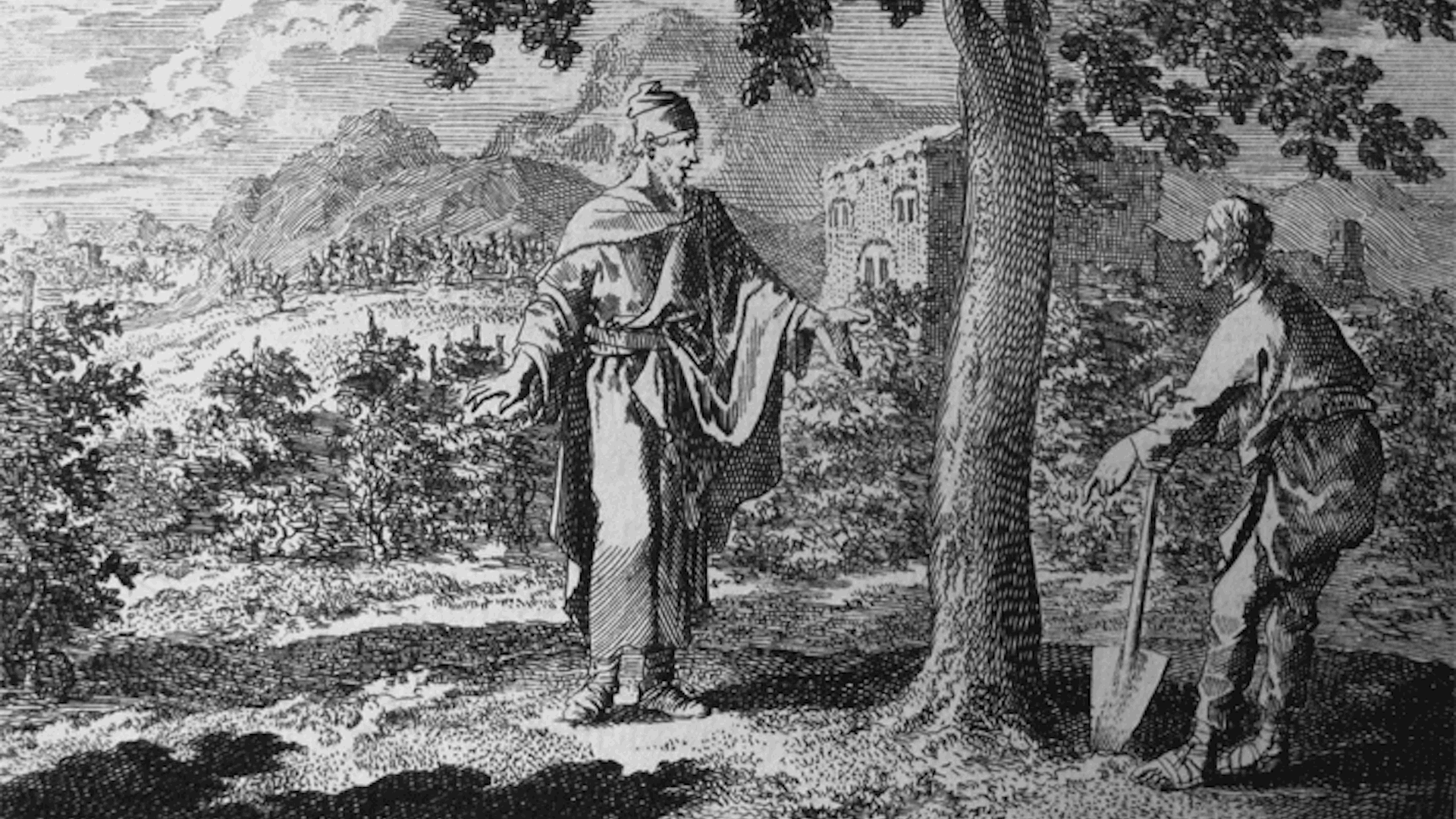
He also spoke this parable: “A certain man had a fig tree planted in his vineyard, and he came seeking fruit on it and found none. Then he said to the keeper of his vineyard, ‘Look, for three years I have come seeking fruit on this fig tree and find none. Cut it down; why does it use up the ground?’ But he answered and said to him, ‘Sir, let it alone this year also, until I dig around it and fertilize it. And if it bears fruit, well. But if not, after that you can cut it down.’ ” (Luke 13:6–9; NKJV)

The Parable of the Fig Tree is an important message about Israel, repentance, and receiving Jesus. But before we can understand what it means, we need to look at its context.

Continue reading